

Does Underpricing Your Home Get You More Money? What Hoboken and Jersey City Sellers Need to Know
By Jill Biggs | Licensed NJ Realtor & Broker, 20+ Years in Hudson County Real Estate
| Data Sources: HCMLS (RMLSNJ) & NJMLS Active Listings
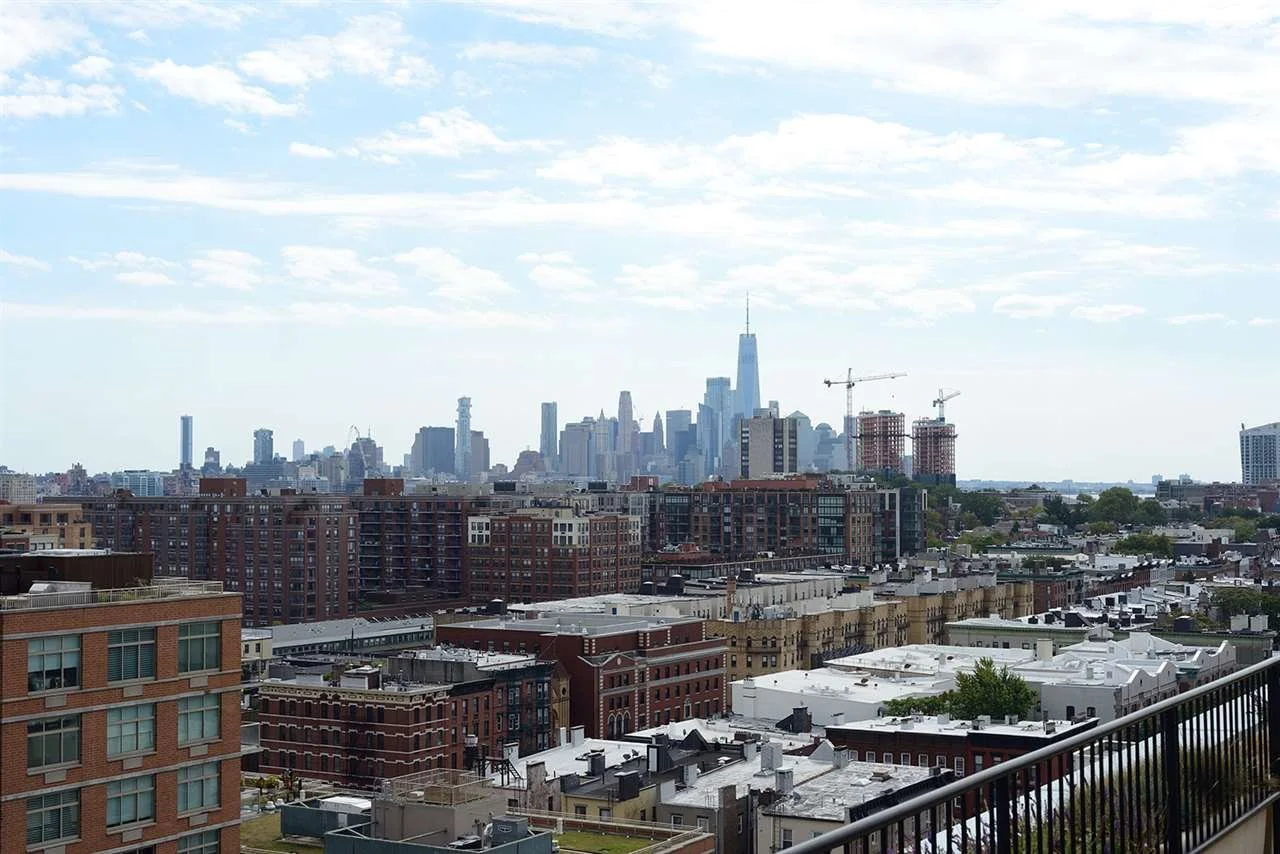
Deliberately underpricing your Hoboken or Jersey City property to attract multiple offers may seem strategic, but it’s often a gamble.
The Direct Answer
In the fast-paced Hudson County real estate market, your listing price acts as your property's primary marketing tool. Price it right, and you will generate immediate interest, multiple showings, and potentially a bidding war. Price it wrong, and your Hoboken condo or Jersey City single-family home could sit stagnant, eventually requiring a stigmatizing price reduction. To ensure you capture top market value, you cannot rely on guesswork or national algorithms.
The Strategy Behind Underpricing a NJ Home for Sale
The "list low, create competition, let the bidding war do the work" strategy was built for a specific type of market: high-inventory, high-turnover environments where generating buyer attention is the primary challenge and offer volume reliably pushes prices past the ask.
Hoboken and Jersey City are not that type of market. This is a dense, low-inventory corridor with consistent demand and a buyer pool that skews sophisticated. Many of these buyers are coming from Manhattan, experienced with competitive real estate, and quick to recognize when a price has been set to manufacture urgency rather than reflect value.
When you understand what the strategy was designed to do, it becomes clear why applying it here without careful, locally-informed judgment creates risk. The market conditions that make underpricing effective simply don't describe this area, and an agent who doesn't know the difference can cost you.
When Underpricing Works — and When It Doesn't
The underpricing strategy isn't inherently wrong. In the right conditions, with the right property, and executed by someone with genuine local expertise, it can be a legitimate tool. But "the right conditions" is doing a lot of work in that sentence.
Research published in the Journal of Economic Behavior & Organization by Wharton School economists found that list price functions as a powerful psychological anchor for buyers, meaning that the number you start with shapes what buyers believe the home is worth and how far they're willing to bid. Analyzing more than 14,000 transactions in New Jersey, Delaware, and Pennsylvania, the researchers found that higher starting prices were consistently associated with higher final sale prices. They found no evidence that underpricing is effective even in hot markets.
Here's the risk that often goes undiscussed: generating more offers doesn't guarantee you'll reach the price your home is actually worth. When buyers compete in a bidding war anchored to a below-market number, the psychological ceiling of that competition can still land short of true market value. You've started the wrong conversation, and it shapes everything that follows.
A well-priced listing that attracts two or three serious, qualified buyers competing from an accurate starting point can outperform a crowd of offers that never breaks through to what the home was genuinely worth. In this market, more offers does not always mean more money. Sometimes it means less, and the difference can be significant.
More offers don’t always mean more money. Research from the Wharton School indicates that your initial price sets the tone—and when it’s too low, it can quietly cap the final result.
What the Research Says About Bidding Wars
It's worth understanding what bidding wars actually produce, not just for sellers, but for everyone at the table. A 2025 study published in Fortune by a real estate economist at Rochester Institute of Technology analyzed nearly 14 million home sales across 30 states over two decades. The findings: buyers who won bidding wars by paying above asking price saw annual returns roughly 1.3 percentage points lower than buyers who didn't, amounting to roughly 8% overpayment over a typical holding period.
For sellers, the implication cuts both ways. Yes, a bidding war can push a price up in the short term. But buyers in competitive situations often recognize after the fact that they overpaid, and that dynamic creates risk for appraisals, financing, and deal stability. A correctly priced home that closes cleanly at full value is often a better outcome than an inflated offer that hits turbulence.
What Responsible Pricing Actually Looks Like
Responsible pricing isn't about pricing high and hoping. It's about pricing accurately, grounded in current comparable sales, a thorough understanding of the specific building, floor, and block, and the confidence to hold that number through the marketing process.
It means not confusing activity with results. Fifteen showings and twelve offers can feel like momentum. But if the final sale price lands below where a correctly priced listing would have opened, the activity was expensive theater.
The Jill Biggs Group prices strategically to attract the right buyers, not the largest crowd. Our sellers don't start negotiations from a number that was designed to draw attention. They start from a number that reflects what their home is genuinely worth in this market, supported by the data and local expertise to defend it.
If you're preparing to sell in Hoboken or Jersey City, the pricing conversation is one of the most important ones you'll have. Learn more about how we approach it on our Selling Your Home page.
Questions Sellers (and Buyers) Often Ask
-
Not reliably, and in a low-inventory market like Hoboken or Jersey City, it carries real risk. Multiple offers anchored to a below-market price don't always climb to true market value. A correctly priced home with strong marketing can produce a better outcome with fewer, more qualified buyers at the table.
-
It can be, under the right conditions and with careful local expertise guiding the decision. The key is understanding whether your specific market, property type, and timing actually support it — not applying a strategy because it worked somewhere else.
-
Sophisticated buyers in markets like ours recognize strategic underpricing quickly and respond differently than buyers in high-inventory environments. They're analytical, they run their own comps, and they know when a price was set to spark competition rather than reflect value. That changes how the bidding dynamics unfold.
-
Counterintuitively, a large number of offers on an underpriced home may never reach the number that a smaller, more focused pool of buyers competing on a correctly priced home would achieve. Starting the negotiation at the wrong number shapes the entire outcome.
-
With precision and local expertise. Our goal is to maximize our sellers' net, not their offer count. Read more about our approach on our Selling Your Home page, or learn about the current market landscape on our Hoboken Real Estate Agent page.
The Bottom Line on Underpricing
Underpricing as a strategy requires the right market conditions, the right property, and an agent with genuine local knowledge. It is not a template that travels well from one type of market to another.
Sellers in Hoboken and Jersey City deserve a pricing strategy built on accurate data and local expertise, not one that trades the strength of their position for the appearance of demand. We get our clients more money, and that's the measurable outcome of pricing responsibly in a market we know better than anyone.
Ready to talk about what your home is worth in today's market? Contact the Jill Biggs Group for a no-pressure pricing consultation.