

Hoboken vs. Jersey City: Where Should You Relocate?
Hoboken vs. Jersey City: When choosing between Hoboken and Jersey City, Hoboken offers a more condensed, walkable 'city' feel, while Jersey City provides more space and diverse neighborhood vibes (like The Heights). Both offer sub-20 minute commutes to NYC via PATH, making them the top choices for Manhattan professionals in 2026.

The Best Seat in the House: Hoboken offers a small-town community vibe just minutes away from the heart of the World Trade Center.
Relocating to Hoboken or Jersey City: What to Know
Deciding where to settle in Hudson County usually comes down to a few key logistics: transit, space, cost, and lifestyle. This guide helps NYC renters, Brooklyn families, and North Jersey move-up buyers compare the two biggest hubs on the Hudson County waterfront, Hoboken and Jersey City.
Moving to Hoboken or Jersey City has become the smart move for those leaving NYC’s five boroughs because these cities offer an ideal "middle ground"—you keep the 24/7 skyline access and urban walkability, but often gain significant tax advantages and more square footage for your dollar. Below is the deep-dive comparison you need to simplify your choice between these two excellent cities.
Why NYC Buyers Are Moving to Hoboken and Jersey City
Many residents decide to live near Manhattan to get more for their housing budget without losing quick access to the city.
Here are the key factors that drive most relocations to Hoboken or Jersey City:
Commute Times: Hoboken is a compact grid where you can reach the PATH or ferry in minutes, with a 15–20 minute transit time to Midtown or WTC. Jersey City is geographically larger; while Downtown offers a sub-15-minute commute, areas like Journal Square now offer direct 23-minute rides to Midtown thanks to recent 2026 service expansions.
Price-Per-Square-Foot: Hoboken prices tend to be higher and more consistent—averaging near $938/sq ft—because the city is only one square mile. Jersey City offers a wider range of price points, allowing buyers to find lower-priced homes in emerging neighborhoods compared to the established waterfront towers.
Space Trade-offs: Hoboken boasts historic brownstone units and mid-rise condos where extra square footage is rare. Jersey City offers more variety, from high-rise condos with deluxe amenities to full single-family houses with private backyards in neighborhoods like The Heights.
School Access: Hoboken has a centralized district with several high-performing charter schools and private schools within its square-mile territory. Jersey City’s district includes some of the top-ranked schools in the state—specifically McNair Academic (#4 High School in NJ) and PS 16 (#2 Elementary School in NJ)—though admission to magnet programs is highly competitive.
Utility & Infrastructure: Hoboken is a "walker’s paradise" where most people live comfortably without a car. Jersey City offers a more traditional urban layout where a car might be helpful in certain neighborhoods, but largely unnecessary in the more densely packed downtown core.
Is Hoboken vs Jersey City a better fit for your lifestyle?

Jersey City’s Rising Skyline: A hub for modern luxury high-rises and a bustling waterfront, offering a sleek alternative to Hoboken's brownstones.
Your choice will likely be determined by the trade-offs between the convenience of a small city and the variety of a larger one. Use the table below to see how Hoboken vs Jersey City stacks up across the most important relocation drivers: (Swipe left to compare in mobile view)
| Factor | Hoboken | Jersey City |
|---|---|---|
| Commute | Primarily PATH or Ferry. Very fast access to Midtown (15 mins) and WTC (15 mins). | Highly variable. Downtown is sub-15 mins to WTC; outer wards require bus or light rail transfers. |
| Housing Type | Many 4-story brownstones (converted rowhomes) and mid-rise condos. | Wide variety, including luxury high-rises, historic rowhomes, and detached single-family houses. |
| Price Range | High and uniform. Expect to pay a premium for any unit within the mile-square radius. | Diverse pricing. Downtown mirrors Hoboken prices, but areas like Journal Square or The Heights offer more value. |
| Neighborhood Feel | Compact, neighborhood-centric, and highly walkable. Most errands are done on foot. | More expansive with distinct districts. Ranges from urban downtown to quieter residential areas. |
Best NJ Towns for NYC Commuters
Those moving to New Jersey are spoiled for choice, with many towns offering convenient access to NYC through various means:
Hoboken: This remains the top choice for a 15–20 minute commute via PATH or Ferry. As one of the most walkable towns in the state, Hoboken effectively functions as a "sixth borough" of NYC for those who want a car-free lifestyle without the Manhattan price tag.
Jersey City: Relocating to Jersey City is a popular choice because of its diverse transit hubs like Exchange Place and Journal Square. Jersey City provides the most varied commute options in NJ, including the Light Rail, multiple PATH lines (with sub-10 minute rides to WTC), and extensive ferry routes.
Weehawken: Positioned directly north of Hoboken, Weehawken is the premier choice for professionals heading to Midtown West. The Port Imperial Ferry offers reliable 8–15 minute crossings, making it a "ferry-first" residential option.
Union City: The "value play" of Hudson County. Union City's high-frequency bus network reaches Port Authority in as little as 10–15 minutes. Because of its cliffside elevation, it offers world-class skyline views at a lower price point than its waterfront neighbors.
Bergen County (Fort Lee & Edgewater): Bergen County is ideal for those who prefer the Edgewater Ferry or bus commutes via the George Washington Bridge. Further inland, "rail towns" like Ridgewood cater to buyers seeking larger lots and a traditional suburban feel with a 60-minute direct NJ Transit line to the city.
Exploring luxury options beyond Hudson County? Many NYC professionals also consider Montclair in Essex County, known for its historic homes, vibrant arts scene, and fast NJ Transit commute. See why high-net-worth buyers are moving to Montclair.
What to Know About Commutes from Hudson County
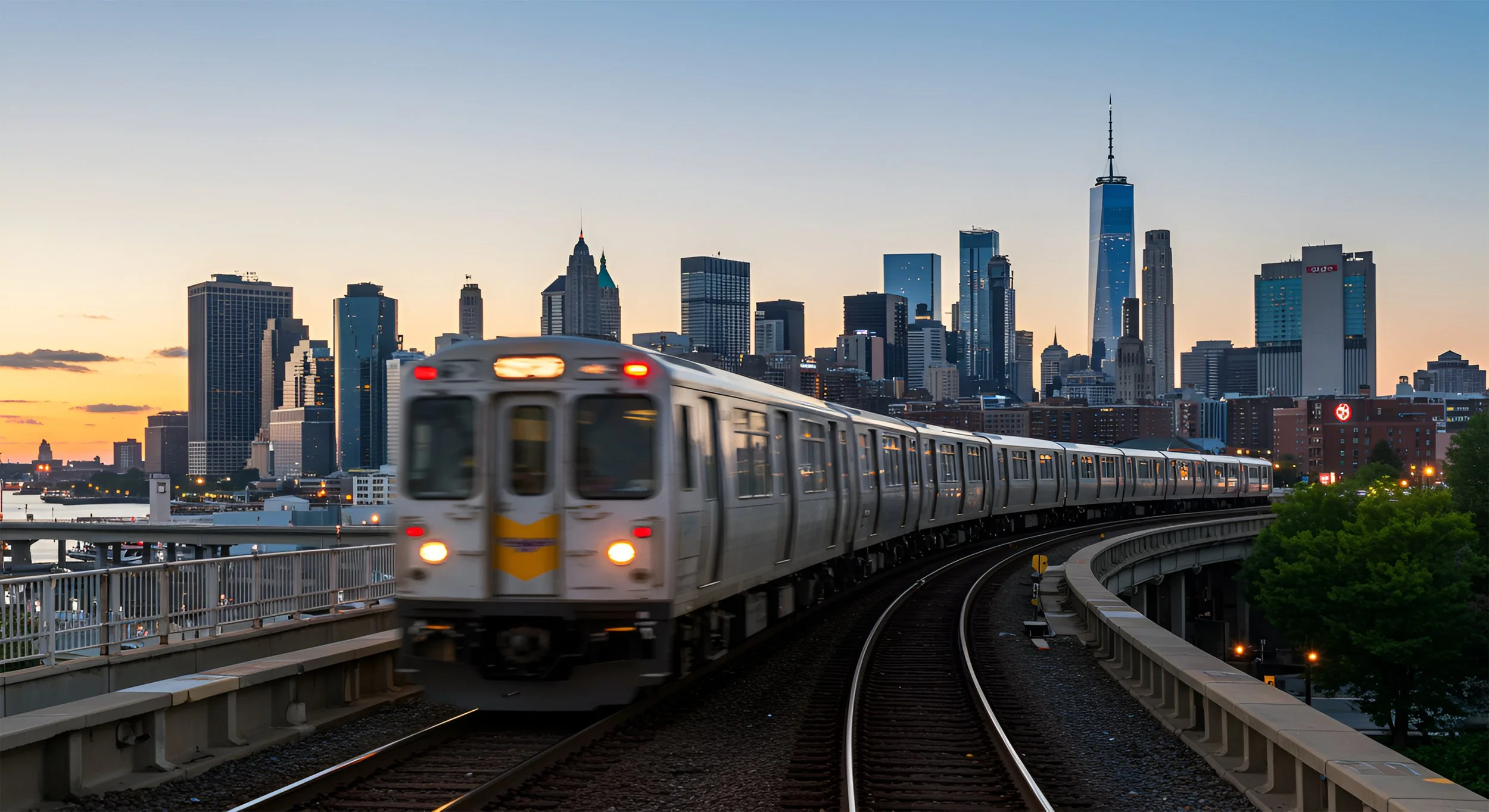
Whether you choose Hoboken or Jersey City, the PATH train provides a 24/7 link to the heart of Manhattan.
While many NYC residents assume a move to the suburbs means a longer commute, Hoboken and Jersey City actually function as convenient transit hubs with 24/7 PATH and ferry access. This infrastructure allows you to maintain an urban lifestyle and a sub-20-minute office commute when relocating to Jersey City or Hoboken.
PATH vs. Ferry vs. Bus: The PATH is the 24/7 workhorse for reaching WTC and Midtown. In 2026, the "Every Line, Every Day" initiative improved weekend service, with trains running every 10 minutes on primary routes. The ferry offers a premium, reliable 10-minute ride to the Financial District and 39th Street. NJ Transit buses (like the 126 in Hoboken) are the primary link for those heading directly to Port Authority, often reaching the terminal in under 20 minutes for Midtown West commuters.
Parking Realities: Street parking in Hoboken is notoriously tight and strictly regulated, making a private garage spot a high-priority "must-have" for most buyers. Jersey City offers slightly more breathing room in neighborhoods like The Heights, but in Downtown, monthly garage rates typically range from $275–$450—mirroring Hoboken’s pricing.
Hybrid Work Trends: The shift to 2–3 face-to-face days in the office has made "commute buffers" like Jersey City or Hoboken even more popular. In 2026, buyers are increasingly willing to accept a 25-minute multi-modal commute in exchange for the extra square footage needed for a permanent home office.
Comparing the Cost of Living: NYC vs. New Jersey
When comparing the cost of living between New York City and New Jersey, the math often favors the latter due to the elimination of the NYC resident income tax. However, moving to The Garden State also entails higher property taxes, making it essential to look at the total monthly costs rather than just property prices.
Property Taxes: New Jersey has the highest effective property tax rates in the country. In 2026, Jersey City's estimated rate was adjusted to 2.33%, while Hoboken remains lower, typically between 1.1% and 1.5%. While higher than NYC’s rates on paper, NJ property values are often assessed closer to market value, and the lack of a city income tax (roughly 3.8%) typically offsets the increased property tax bill for many residents.
HOA Fees: Monthly condo fees in Hoboken and Jersey City generally range from $350 to $900, depending on the building’s amenity package and age. These are often more predictable than NYC co-op maintenance fees because they don't include an underlying building mortgage.
Commuter Costs: A monthly PATH pass currently costs $120.75, though this is scheduled to increase to $131.00 in May 2026. For those opting for the ferry, costs are higher—approximately $300–$450 per month—but many commuters consider the time saved and improved experience worth the premium.
Insurance: Homeowners insurance in the Gold Coast is generally competitive with NYC, though premiums can rise for properties in designated flood zones near the waterfront. Most condo owners only require "walls-in" (HO-6) policies, which are significantly more affordable than full-structure coverage for detached homes.
Relocating to Hoboken or New Jersey with Kids?
When comparing Hoboken vs Jersey City for families, school quality is often at the top of parents’ non-negotiables.
Hoboken offers a cohesive "urban-suburb" experience where top-rated schools are often a few blocks away, as detailed in our Hoboken Schools Guide.
Conversely, Jersey City provides a wider array of educational options, from elite magnet high schools to renowned private learning institutions. For a full list of highly rated schools, check out our Ultimate Jersey City Schools Guide.
Buying a Home After Relocating

Historic Charm: Hoboken is famous for its tree-lined streets and impeccably preserved brownstones, offering a tight-knit neighborhood feel that is rare so close to the city.
Living in Hoboken or Jersey as renters lets you experience the local lifestyle without overcommitting yet. But once you’re ready to transition from tenant to owner, you have to be prepared to act fast—or lose out to other buyers. Here’s how to make sure that doesn’t happen:
Pre-approval Timing: You should begin the consultation process with a lender at least 90 days before you plan to buy. However, ensure your formal pre-approval letter is current (typically refreshed every 60–90 days) before you begin viewing properties. This document is essential, as most sellers in the Gold Coast will not grant a private showing without proof of financing.
Market Competitiveness: While the market has stabilized since the extreme peaks of previous years, prime properties still move quickly. In 2026, well-located homes in Jersey City average 55–65 days on market, while Hoboken remains more aggressive at 30–50 days. Success requires staying closely attuned to new inventory and being prepared to act within the first two weeks a home hits the market. As such, having a real estate agent that specializes in these areas, like the Jill Biggs Group, is essential.
Offer Strategies: When moving to Hoboken or Jersey City, a "clean" offer with fewer strings attached often carries more weight than one with a slightly higher price tag. Strategies like being "fully pre-underwritten"—which signals to the seller that your loan is nearly cleared to close—or offering a flexible closing timeline can provide the security a seller needs to choose your bid over a competing one.
Frequently Asked Questions- RelocatinG to Hoboken VS Jersey City
-
Yes, living in Hoboken typically offers a significant financial advantage, especially when you factor in the immediate 3.8% savings from avoiding the NYC resident income tax. Beyond income taxes, you’ll benefit from a lower sales tax (6.625% in NJ vs. 8.875% in NYC) and generally find more square footage for your dollar than in Manhattan or prime Brooklyn. These offset the higher property taxes that New Jersey commands.
-
Jersey City is a top choice for families thanks to its expansive parks and variety of school options, including top-ranked schools like PS 16. Neighborhoods like Downtown and The Heights have a strong community feel, making it easy to balance a career in the big city with a family-oriented home life.
-
The commute is surprisingly fast. In 2026, the PATH train and ferry will often get you to the World Trade Center or Midtown in under 20 minutes. Even in neighborhoods like The Heights, the combination of the Light Rail and PATH keeps most door-to-desk commutes under 35 minutes.
-
Living in Hoboken means owning a car is entirely optional. The city is widely considered one of the most walkable in New Jersey, with a Walk Score of 97. With 24/7 transit and all essentials within a one-mile radius, most residents find that ditching the car saves them a fortune in garage fees, which currently average $300–$450 per month.
-
Renting for a year is a great way to "test drive" a given neighborhood, but buying is usually the smarter long-term move if you plan to stay for at least 5–6 years. Owning a home here allows you to build equity in a stable market while locking in your monthly housing costs against rising rents in the area.
Work With a Local Team That Specializes in Relocation to Hoboken or Jersey City
Moving across the Hudson is more than just a real estate transaction; it’s a total lifestyle shift that requires a partner who understands both sides of the river. The Jill Biggs Group is here to ensure that your move to live near Manhattan NJ is as seamless as possible by handling the logistics while you focus on settling in.
Cross-river relocation specialists: Our team specializes in helping buyers navigate the specific tax, transit, and lifestyle changes that come with moving from New York City to the New Jersey Gold Coast.
Not just agents: We act as your boots-on-the-ground advocates, providing insights into neighborhood micro-cultures that you simply won't find on a standard listing site.
Advisors for the move itself: From recommending reliable movers to advice on school registration, we have answers to all your questions - big and small.
With over $3 billion in lifetime transactions, the Jill Biggs Group brings the experience needed to handle the most complex relocation scenarios. We don't just close deals; we use our deep market knowledge and track record to ensure you make the right calls every step of the way.
Whether you are ready to tour listings or just have questions about a given neighborhood, get in touch with our Hoboken or Jersey City agents to get started on your search.

