

How to Choose a Listing Agent in Hudson County, New Jersey
A Zillow study found that 56% of sellers consult only one agent before choosing who lists their home. In most markets, that is a risky shortcut. In Hudson County, it is an expensive one. The difference between Downtown Jersey City and a few blocks behind it, or between an agent with 12 closed transactions in Hoboken and one with 400, can mean tens of thousands of dollars at the closing table.
This guide is not a generic checklist that applies anywhere. It is a framework built specifically for sellers in Hoboken, Jersey City, Weehawken, and the surrounding Hudson County market, where local expertise is not a differentiator. It is a prerequisite. For context on what the selling process looks like from first meeting through close, see our selling guide.
The framework moves in the same order your search should: verify each candidate's record before you meet, read their reviews at scale, test their local knowledge in the interview, evaluate their marketing plan in detail, and know the red flags that should end the conversation. It closes with the eight questions to bring to every listing consultation.
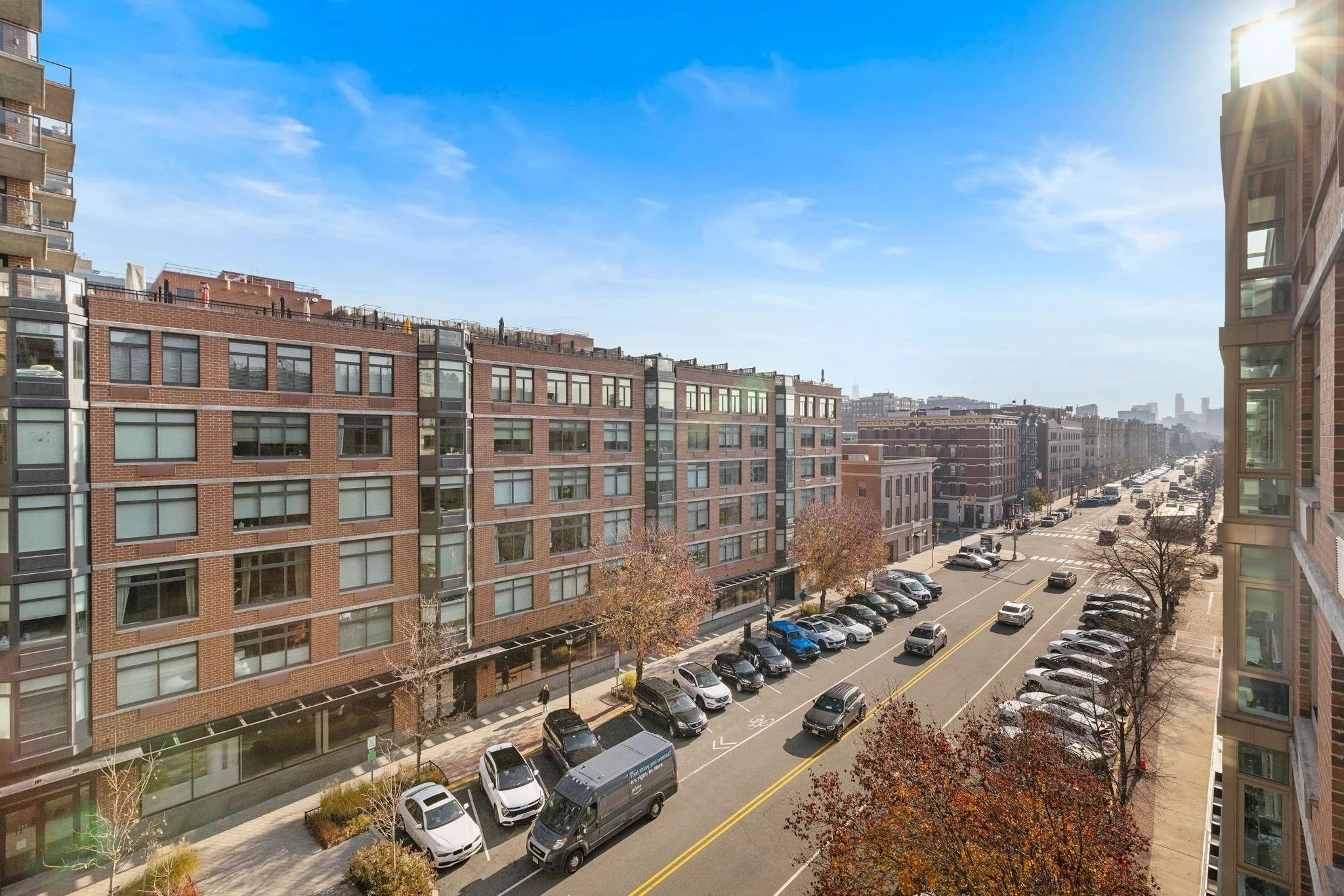
Hudson County's condo-dominant market moves fast. The agent you choose determines your outcome!
Verify the Track Record Before You Meet
Every agent in Hudson County will tell you they are experienced, well-connected, and results-oriented. The problem is that none of those claims are verifiable in any meaningful way without looking at the underlying transaction data. Fortunately, two independent sources let you check the record before you ever sit down with a candidate, and both checks together take less than ten minutes.
RealTrends Verified
The 2026 RealTrends Verified rankings, published by HousingWire, covered over 50,000 verified agents and teams based on 2025 production data. When you see a RealTrends Verified ranking, you are looking at a number checked against actual MLS closings. When you see a marketing award or a brokerage-internal ranking, you are looking at advertising. The distinction matters.
New Jersey State License Verification
The New Jersey DOBI Real Estate Licensee Search lets you confirm any agent's license status, expiration date, and disciplinary history before signing a listing agreement. This takes three minutes, and most sellers skip it. An agent with an expired license, a recent complaint, or a history of disciplinary action is a fact you should know before you meet with them, not after.
Why Volume Matters Here
As you review production data, pay particular attention to annual transaction count. An agent doing 50 or more transactions per year has developed systems, vendor relationships, and market pattern recognition that an agent doing 8 to 12 per year has not, regardless of how long they have been licensed. In Hudson County's condo-dominant vertical market, where the difference between buildings matters as much as the difference between neighborhoods, this experience gap is particularly consequential.
Verified production tells you an agent can close at volume. It does not tell you what it is like to be their client. For that, turn to the reviews.
Read the Reviews at Scale
A 5.0 rating with 12 reviews tells you almost nothing. A 4.9 with several hundred tells you a great deal. At that volume, every transaction that goes sideways shows up: every miscommunication, every missed deadline, every buyer who felt misled. Holding a near-perfect rating across hundreds of verified reviews while closing hundreds of transactions per year means the operation is consistent at scale, not just good on its best days.
When evaluating reviews, look for patterns across platforms. Google Business Profile reviews are harder to game than curated testimonials on a brokerage website, so cross-reference Google against an agent's website. Prioritize reviews that mention specific outcomes: days on market, whether the home sold above asking, how the agent handled a difficult inspection result or a buyer who walked. Generic praise is less useful than specific outcome language.
Verified data and reviews at scale will get an agent onto your shortlist. The interview determines who actually gets the listing, and in this market, the interview should be a test.
Test the Local Knowledge in the Interview
Include these three questions in your interview to separate genuine Hudson County expertise from generic real estate competence. A candidate who stumbles on any of them is telling you something the marketing materials will not.
Question 1: Seller Closing Costs
“What does a seller in my area typically pay in closing costs?”
In New Jersey, the seller pays the Realty Transfer Fee, a graduated state tax that runs from roughly 0.4% to about 1% of the sale price. Since July 2025, sellers, not buyers, also pay the Graduated Percent Fee (formerly the mansion tax) on sales over $1 million: 1% on sales between $1 million and $2 million, rising in tiers to 3.5% on sales above $3.5 million, applied to the entire sale price. In Hudson County, where a two-bedroom condo can clear the $1 million threshold, this rule directly affects your net proceeds and your pricing strategy. Add attorney fees, commission, and any building-required payoffs, and the spread between sale price and net proceeds is significant. An agent who cannot walk you through these numbers line by line, or who is still quoting the old rules where the buyer paid the mansion tax, is not current on the market they claim to know.
Question 2: Negotiating an Offer
“Walk me through the last offer you negotiated that came in below asking. How did you get to the final number?”
The answer you want is a specific story with a strategy behind it. A strong agent will explain how they assessed leverage (days on market, showing activity, competing buyer interest), whether they kept backup buyers engaged, and how they used terms beyond price, such as closing timeline, appraisal-gap language, and inspection credits, to close the gap. In Hudson County's condo market, the inspection and the appraisal are where deals are won or lost after acceptance, so listen for how the agent protects the contract price through those two milestones. An agent whose only move is to counter at full price and hope is negotiating with one tool. A vague answer here predicts a vague performance when a real offer is on the table.
Question 3: Sale-to-List Ratio
“What was the sale-to-list price ratio on your last ten listings in this neighborhood?”
This number is in the MLS and verifiable, and it is the single best predictor of pricing discipline. It tells you whether the agent prices accurately from day one or has a pattern of taking overpriced listings and reducing. An agent whose last ten listings averaged 97% of original list price shows a systematic pricing problem; an agent whose listings averaged 101% shows a systematic pricing strength. Ask for the number. A genuine expert will have it. This question also happens to be your best defense against the most expensive trap in the listing process, which Section 05 covers in detail.
The interview tests what the agent knows. The marketing plan tests what the agent will actually do with your property, so ask to see it in writing before the consultation ends.
Evaluate the Marketing Plan in Detail
In a market where the first photograph determines whether a buyer books a showing, the quality of a listing's presentation is not a soft factor. It is a primary driver of offer volume and final sale price. Ask to see examples of how the agent has marketed comparable properties, and hold what you see against these three standards:
1. Professional photography
Phone photos and dark, poorly composed interiors are substandard in this market. Professional photography with proper lighting, composition, and editing makes a measurable difference in click-through rates on listing platforms, and it is the single cheapest lever an agent controls. If the sample listings the agent shows you do not look better than the competing listings on your block, keep interviewing.
2. Video walkthroughs or 3D tours
Nearly half (49%) of buyers surveyed by Zillow said they would feel at least somewhat confident making an offer on a home after only taking a virtual tour. In a market with a significant share of out-of-state and international buyers who cannot tour in person, a 3D walkthrough is not a premium add-on. It is table stakes.
3. Full MLS exposure and syndication
Confirm that the listing will go on NJ MLS with full data fields completed and syndicated to Zillow, Realtor.com, Homes.com, and Redfin. Private listings (properties kept off the MLS) get far less attention from buyers and typically sell for less. Avoid agents who suggest keeping your listing private unless you have a compelling, specific reason.
A strong marketing plan is what a good agent shows you deliberately. Red flags are what a weak one reveals by accident. Here is what to watch for.
Know the Red Flags
The Eight Questions to Ask Before You Sign
Every question below maps back to the framework above. Bring them to every listing consultation and write down the answers. Comparing three agents' answers side by side is where the framework pays off.
What is your verified closed sales volume in this neighborhood for the past 12 months, and can you show me the MLS records?
Section 01 · Verified Track RecordWhat is your average sale-to-list price ratio on your last 10 listings in this area?
Sections 03 & 05 · Pricing Discipline & Defense Against Buying the ListingWhat is your average days on market, and how does it compare to the neighborhood average?
Section 01 · Production DataWalk me through the specific marketing materials you would produce for my property.
Section 04 · Photography, 3D Tour, MLS FieldsWhat will I pay in closing costs, and can you show me a written net sheet?
Section 03 · Realty Transfer Fee, Graduated Percent Fee, Attorney, CommissionWho specifically on your team would manage my transaction day-to-day?
Team Structure · See FAQ BelowCan I contact three recent sellers you represented in this neighborhood directly?
Section 02 · Reviews You Can Verify YourselfWhat is your commission structure, and what services does it include?
Compare Scope, Not Just Rate · See FAQ BelowHow The Jill Biggs Group Answers These Criteria
We built this framework because it is the one we would want to be measured against. Here is how the team holds up on each of the five criteria:
Verified track record (01). The Jill Biggs Group is the #1 real estate team in New Jersey by RealTrends Verified 2026 (and #6 nationally by sales volume), with $548.87 million in closed sales and 757 transaction sides in 2025. The ranking is based on independently verified MLS data, not self-reporting.
Reviews at scale (02). The team carries 320 Google reviews at 4.9 stars and 757 Zillow reviews at 5.0, over 1,000 combined verified reviews across every major platform. The full archive is at thejillbiggsgroup.com/reviews.
Local knowledge (03). The team has operated in Hudson County for over 20 years, with closed transaction history in Downtown Jersey City, Journal Square, The Heights, Hoboken, and Weehawken, at the building-specific level in each sub-market.
Marketing standard (04). Every listing includes professional photography, 3D virtual tours, full NJ MLS syndication, and direct outreach to buyer networks that include the international buyer pool active in the Hudson County market.
No red flags (05). If you are evaluating listing agents and want to put our team through the same framework outlined in this guide, contact us for a no-obligation listing consultation. Our selling guide covers what the process looks like from first meeting through close.