
Multi-Family Homes for Sale in Union City, NJ
Transactions
Range
Listings
asking price—or more
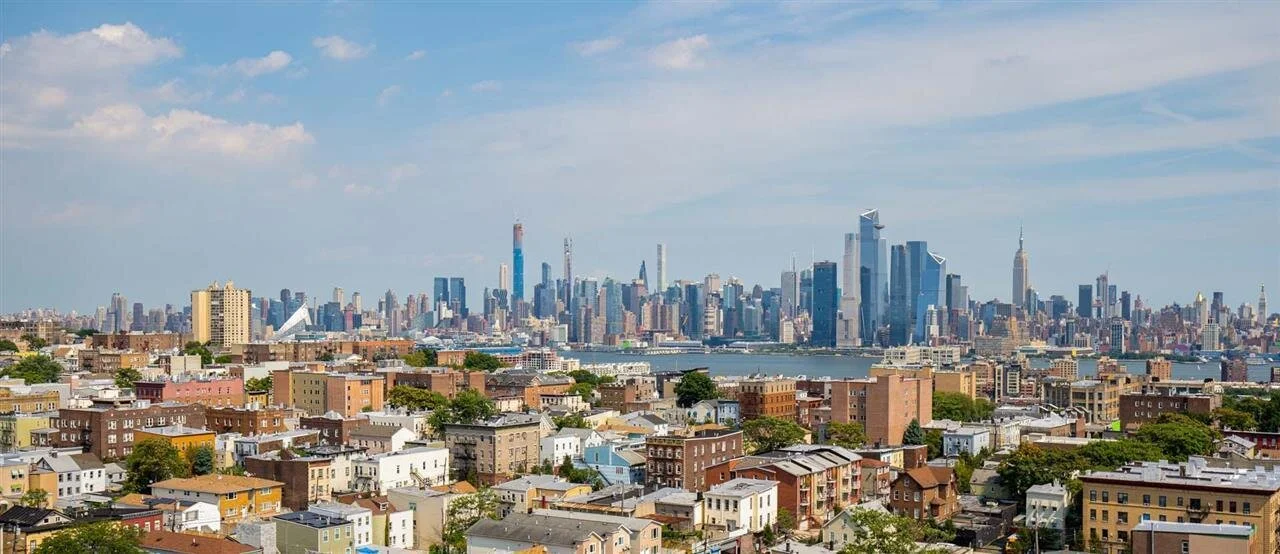
Union City, NJ does not come up first in most Hudson County buyer searches. Most people start with Hoboken or Jersey City, hit the price wall, and then look around. Union City is usually where that search ends up, and usually as a fallback.
That framing misses what is actually going on here. This is a city of over 64,000 people packed into 1.3 square miles with a Walk Score of 94 where 4 in 5 households rent rather than own. Those are not background statistics. For anyone buying a multi-family, they are the two numbers that matter most: the density tells you that rental demand is built into the address, and the ownership split tells you the demand is structural, not cyclical.
The 41 sold transactions in this dataset (22 two-family, 14 three-family, 5 four-family) closed at a median of $832,000, with a median of 21 days on market and an average sale-to-ask ratio of 101.1%. Buyers in this market are not taking their time. When a well-priced building comes up, it moves.
This guide, created by the Jill Biggs Group, covers what you need before making an offer: what prices look like by property type, what the rental income picture looks like, which corridors are worth focusing on, and what to watch for in due diligence. To learn more about the area visit our Union City Community Guide or Things to See and Do in Union City.
Multi-Family Sale Prices in Union City
The numbers below come from 41 closed NJMLS transactions over the last 12 months ending May 1 2026, in this dataset. This is not list-price data. These are sale prices on buildings that went under contract and closed.
| Property Type | Sale Price Range | Median Sale Price | Market Notes |
|---|---|---|---|
| 2-Family (22 sales) | $550,000 – $1,400,000 | $826,000 | Median DOM: 21 days. 101% avg. sale-to-ask. Widest price spread of any type. |
| 3-Family (14 sales) | $570,000 – $1,400,000 | $887,500 | Median DOM: 23 days. Investor-targeted. Income density drives the premium. |
| 4-Family (5 sales) | $850,000 – $980,000 | $942,500 | Smallest sample. Median DOM: 21 days. Upper end shows strong income yield profile. |
The 101% average sale-to-ask ratio is the detail that matters most for buyers. It means the market is not soft. Listings that are priced right are consistently drawing offers at or above ask. If you are coming in expecting to negotiate down from list price on a well-conditioned building in a strong corridor, the data does not support that expectation.
The wide price spread on two-family homes ($550K to $1.4M) reflects two very different buyer profiles trading in the same category. At the lower end, you have entry-level owner-occupants buying their first income property. At the upper end, you have investors or buyers purchasing converted brownstones near the Hoboken border, where location carries a premium over the rest of the city's two-family stock.
Rental Income in Union City: 2026 Averages by Unit Type
In Union City, 4 in 5 households rent rather than own. That figure comes from the U.S. Census and is not speculative. It means the renter pool here is not a niche market segment — it is the dominant housing tenure in the city. Landlords here are not chasing tenants. Tenants are chasing available units.
The rental averages below come from Trulia (April 2026), based on active and recently rented listings in Union City.
| Unit Type | Avg. Monthly Rent | Avg. Size | Notes |
|---|---|---|---|
| Studio | ~$1,900/mo | 384 sq ft | High demand from solo NYC commuters |
| 1-Bedroom | ~$2,183/mo | 649 sq ft | Most common unit type in 2-family stock |
| 2-Bedroom | ~$2,618/mo | 870 sq ft | Family and professional share renters; strong retention |
| 3-Bedroom | ~$2,391/mo | 909 sq ft | Family demand; longer average tenancy |
Here is what the income math looks like on a real building type. A three-family on a Kennedy Boulevard corridor block purchased at $900,000 with one two-bedroom and two one-bedrooms generates approximately $6,984 per month in gross rent ($2,618 + $2,183 + $2,183 using Trulia averages). That does not make the investment decision for you. But it does confirm that the purchase price is supportable by income, which is the first test any investor needs to clear.
Our team runs building-specific income analysis with every investor client before an offer goes in. Contact us for a property-level breakdown.
Union City Multi-Family: Corridors and Neighborhoods
Union City is 1.3 square miles, so every address is technically walkable. But corridor matters for how easily you find and keep tenants, and for what you pay.
| Corridor | Primary Stock | Transit | Best For | Price Tier |
|---|---|---|---|---|
| Bergenline Ave corridor | 2–3 family above/near retail | Bus 123/127/159 to Port Authority | Lowest vacancy risk; highest foot traffic | Mid |
| Kennedy Boulevard | 2–4 family; some mixed-use | Bus 123 direct, Lincoln Tunnel approach | Income density investors; multi-unit portfolios | Mid |
| Palisade Ave / hillside blocks | 2-family residential | Jitney + HBLR at 49th St | Owner-occupants; quieter renter profile | Mid-High |
| Upper Union City (north) | 2–3 family; some larger buildings | Bus 159; jitney connections | Entry-level investment; first income property buyers | Entry |
| Near Hoboken border (south) | 2-family; converted brownstones | HBLR + bus to Hoboken Terminal | Commuters needing PATH; premium location | High |
Bergenline Avenue
Bergenline is the longest commercial corridor in New Jersey and the center of daily life in Union City. Bakeries, pharmacies, restaurants, drugstores, clothing stores. Multi-family buildings on or adjacent to Bergenline carry the lowest vacancy risk in the city because renters who want walkability choose these blocks first. Two-family buildings here start around $550,000. For investors comparing entry points across the county, this is the most accessible income-producing real estate in Hudson County at this price level.
Kennedy Boulevard
Kennedy Boulevard is where NJ Transit bus 123 runs toward the Lincoln Tunnel. It is the transit spine of the city. Three- and four-family buildings here attract investors running income density calculations. Buildings between 32nd and 48th Streets are the most active multi-family trading zone in Union City.
Near the Hoboken Border
The blocks south of 18th Street have converted brownstone two-families that consistently sell at a premium over the rest of Union City's multi-family stock. Buyers here are getting Union City pricing with Hudson-Bergen Light Rail access to Hoboken Terminal and a one-transfer PATH connection to Midtown and the World Trade Center. For buyers who want the house-hack structure at Union City prices with near-Hoboken transit, these are the target blocks.
Who Buys Multi-Family in Union City
The House-Hacker Priced Out of Hoboken and Jersey City
The most common buyer our team sees for Union City multi-family is someone who has been through the Hoboken and Jersey City condo searches, gotten frustrated by the price-per-square-foot math, and realized that a two-family in Union City at $700,000 to $800,000, where they live in one unit and rent the other, can carry a lower effective monthly cost than a Hoboken one-bedroom condo at $650,000. The rental demand is real and consistent, which is what makes the math work.
The Hudson County Portfolio Investor
Investors who already own in Jersey City or Hoboken are using Union City to add income-producing assets at a lower basis without leaving the county. The gross yield profile on a three-family at $900,000 generating $6,000-plus per month in gross rent is no longer available in Hoboken or Downtown Jersey City. Union City is where that math still works.
The NYC Renter Who Has Run the Numbers
A buyer paying $3,200 per month in Manhattan rent who purchases a two-family in Union City, puts 20% down, and rents the second unit at $2,183 to $2,618 per month is covering a meaningful share of the mortgage payment from day one. The NJ Transit bus to Port Authority runs every few minutes from Bergenline Avenue. The total monthly cost comparison versus Manhattan rent is what closes these deals.
What to Check Before Making an Offer
Union City multi-family transactions have specific due diligence items that standard buyer checklists do not cover. Our team reviews all of these before any offer goes in on behalf of a client.
Legal unit count and CO: Confirm the legal unit count matches the certificate of occupancy. Older Union City stock has informal additions. Your attorney will pull the CO, but flag this at the offer stage.
Current leases and rent amounts: Request copies of all leases and month-to-month agreements before going under contract. Below-market long-term tenants affect your income underwriting from day one.
Heating system and shared utilities: Older Union City multi-family often has a single boiler serving all units. Understand who pays utilities in each tenancy. Owner-paid heat across all units materially affects net operating income. Request 12 months of utility bills before closing.
Rent control applicability: Verify whether the property is subject to local rent stabilization or control. This varies by building age, unit count, and municipality. Have your real estate attorney confirm before signing a contract.
Property taxes and equalization ratio: Hudson County properties are assessed at a fraction of market value. An assessment update following your purchase can increase the effective tax bill. Run the numbers against the current assessed value, the county equalization ratio, and estimated post-sale reassessment.
Parking: Union City is over 52,000 people per square mile. Street parking is competitive. A building with off-street parking commands a rental premium and reduces tenant turnover. Check this early.
Transit Options from Union City to Manhattan
Renter demand in Union City is tied directly to transit. Buyers underwriting a multi-family purchase here need to know what each corridor's residents actually use.
NJ Transit Buses 123,125,127, and 159: Run along Kennedy Boulevard and Bergenline Avenue to Port Authority Bus Terminal in Midtown. Door-to-door from Bergenline is 20 to 30 minutes depending on traffic, per NJ Transit schedules. This is the primary commute route for most Union City renters.
The Jitney: A private shuttle network running 24 hours a day, 7 days a week along the main corridors. Every few minutes, low cost, no schedule to track. A genuine transit amenity for Bergenline-adjacent blocks.
Hudson-Bergen Light Rail (Bergenline Ave / 49th Street): The station at 49th Street connects south through Jersey City to Hoboken Terminal, where PATH trains reach Midtown (33rd Street) and the World Trade Center. For tenants who work in Jersey City or need PATH access, this is the connection.
Driving via Route 495 and the Lincoln Tunnel: Route 495 runs beneath sections of Union City and connects directly to the Lincoln Tunnel approach. Midtown is roughly 15 to 20 minutes outside peak hours, one of the most direct Lincoln Tunnel approaches in the county.
For more detailed schedule and fare information visit NJ Transit.
Frequently Asked Questions
-
Based on 41 closed NJMLS transactions from 5-1-2025 - 5-1-2026: two-family homes sold between $550,000 and $1,400,000 with a median of $826,000. Three-family homes sold between $570,000 and $1,400,000 with a median of $887,500. Four-family homes sold between $650,000 and $960,000 with a median of $942,500. The average sale-to-ask ratio across all three types was 101.1%. Source: NJMLS / Homelight dataset. Verify before publication.
-
The structural case is strong. Four in five households in Union City rent rather than own, the Walk Score is 94, and NJ Transit bus service reaches Port Authority in 15 to 20 minutes. The 101% sale-to-ask ratio in the transaction data shows that buyers are competing for well-priced buildings, which means the market is not soft.
-
A studio approximately $1,900 per month; one-bedroom approximately $2,183 per month; two-bedroom approximately $2,618 per month; three-bedroom approximately $2,391 per month. A two-family with two one-bedroom units generates roughly $4,366 per month in gross rent at these averages. A three-family with mixed unit sizes can generate $6,500 to $7,000 per month gross depending on configuration.
-
Union City multi-family starts at $550,000 for a two-family. Hoboken's overall median is above $895,000. Downtown Jersey City's median is near $875,000. Transit access is comparable: NJ Transit buses reach Port Authority in 20 to 40 minutes from both Bergenline and Kennedy Boulevard. In Union City, 4 in 5 households rent rather than own, the highest share in Hudson County.
-
Dedicated townhouse inventory is limited. The dominant multi-family form in Union City is the two- and three-family attached row building. Buyers specifically seeking townhouse-style multi-family will have better inventory in Weehawken or Hoboken.
Work with The Jill Biggs Group on Union City Multi-Family
The Jill Biggs Group has closed transactions across Union City's multi-family corridors, from entry-level two-families on the Bergenline side to three-family buildings on Kennedy Boulevard. Whether you are buying for owner-occupancy, adding to a portfolio, or running the numbers on a specific building, our team works through the analysis before the offer goes in.
Browse current Union City listings or contact our team directly for a current inventory breakdown, building-level rental income analysis, and off-market options.