

Hudson County Property Taxes: Rates, Bills, and What to Expect in 2026

Direct Summary
Hudson County property taxes rose in 2026, and unevenly. The county levy grew 9.27%, and the county tax went up in 11 of 12 towns, led by Kearny at 14.6%, Jersey City at 14.42%, and Guttenberg at 13.9%, while Secaucus dropped 1.32%. Hoboken raised its municipal levy 11.5% and its school levy 23.6%, and Jersey City raised its municipal rate 15.15%, with school and county adding roughly 14.5% on top. On the most recent certified figures, effective tax rates run from about 1.08% in Hoboken to about 2.44% in Guttenberg, and about 1.72% countywide, while the statewide average residential bill topped $10,000. Since July 2025, New Jersey sellers pay the Graduated Percent Fee on home sales over $1 million. Homeowners 65 and older with income of $200,000 or less can apply for Stay NJ by November 2, 2026.
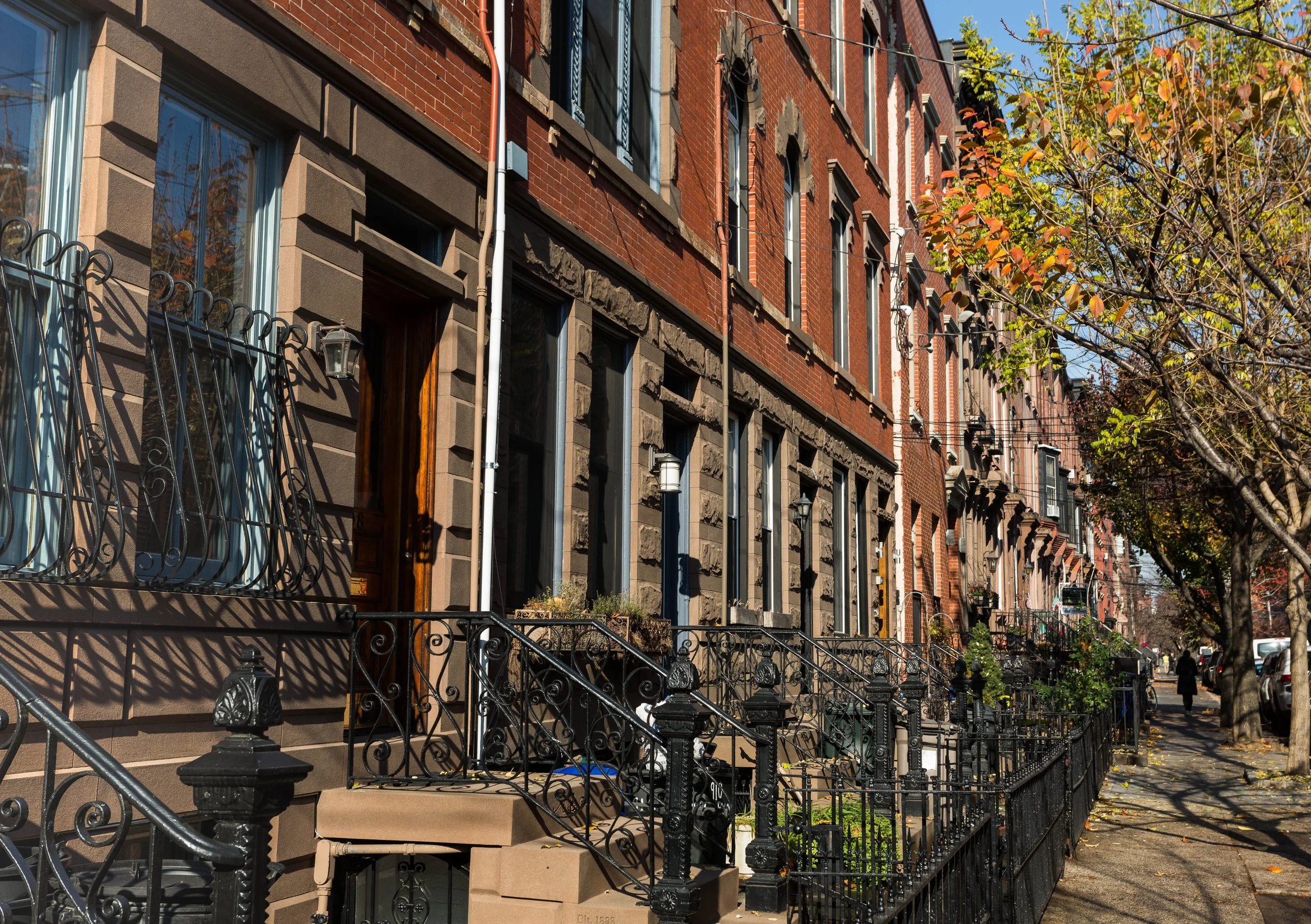
residential street, Hudson County, NJ (Hoboken)
If you own in Hudson County, the question on your mind this fall is how big your next bill will be. For most owners it's bigger than last year, and how much bigger depends almost entirely on which side of a town line you live on.
This guide covers what changed in 2026, the rates for all 12 towns, how the county stacks up against the rest of the state, and what the numbers mean for anyone buying or selling right now. If you want the mechanics behind a single bill, our guide to how property taxes are calculated in Hudson County walks through the formula step by step.
What Do Property Taxes Look Like in Hudson County in 2026?
Higher, almost everywhere. Every Hudson County bill combines three levies (municipal, county, and school), and in 2026 all three moved up in the county's two largest cities at the same time.
Hoboken adopted its municipal budget on June 11 with an 11.5% increase in the municipal levy, down from the roughly 19% introduced in April. Its Board of Education's 2026-27 budget raised the school levy 23.6%, which the district calculated at about $714.59 more a year for a home assessed at the city average of $532,600. The county share of a Hoboken bill rose 4.6%, about $26 more per quarter on the average assessed home.
Jersey City adopted an $886.4 million budget on August 26 with a 15.15% increase in the municipal tax rate, after months of debate over a $255 million deficit and $120 million in state aid. Municipal taxes are only about 37% of a Jersey City bill. The other 63%, school and county, was set to rise roughly 14.5% under budgets adopted earlier in the year, and the county share alone rose 14.42%, about $59 more per quarter on the average assessed home.
Across the county, the levy rose 9.27% to $495.2 million, and it landed unevenly because each town's share follows its equalized property value. When a town's values grow faster than its neighbors', it absorbs more of the county bill.
Hudson County · 2026 county tax at a glance
That last point is why the rate on your bill only tells half the story. Comparing towns fairly takes the effective rate, which the next section lays out.
What Are the Property Tax Rates in Each Hudson County Town?
The general tax rate printed on a bill can't be compared from town to town, because each town assesses homes at a different fraction of their market value. An effective tax rate corrects for that and shows the tax as a share of what homes are worth on the market.
Here's every Hudson County municipality, lowest effective rate to highest, alongside how its county tax changed in 2026:
| Municipality | Effective tax rate | 2026 county tax change |
|---|---|---|
| 1Hoboken | 1.08% | +4.6% |
| 2Secaucus | 1.55% | −1.32% |
| 3North Bergen | 1.67% | +6.94% |
| 4East Newark | 1.69% | +0.13% |
| 5Harrison | 1.75% | +4.6% |
| 6West New York | 1.79% | +8.73% |
| 7Jersey City | 1.86% | +14.42% |
| 8Weehawken | 1.86% | +4.13% |
| 9Union City | 1.88% | +4.94% |
| 10Bayonne | 2.01% | +4.9% |
| 11Kearny | 2.02% | +14.6% |
| 12Guttenberg | 2.44% | +13.9% |
Decrease Under 5% 5% to 10% Over 10%
Sources: New Jersey Division of Taxation, 2025 Abstract of Ratables, County of Hudson, the most recent certified rates for every town; Hudson County 2026 budget, county finance officials via Hudson County View and Hudson Reporter. Effective rate equals each town’s certified general rate multiplied by its equalization ratio.
Two things jump out. First, Kearny and West New York carry general rates of 10.848 and 8.707, the kind of numbers that scare people off, yet their effective rates land at about 2.02% and 1.79%, right in the middle of the pack. Their assessments sit at a small fraction of market value, so the printed rate runs high. Second, Secaucus is the lone town where the county tax fell this year, after a steep increase the year before, so it reads less like a gift and more like last year's change coming back.
The effective rate column uses the last certified figures because towns certify their 2026 rates one at a time as budgets close, and the state publishes the complete set in its Abstract of Ratables only once every town is done. That 2026 abstract isn't out yet, while the 2026 county changes above are final.
How Do Hudson County Property Taxes Compare to the Rest of New Jersey?
Effective tax rate, most recent certified figures
$10,000+Average residential property tax bill statewide in New Jersey, 2025. Hudson’s countywide rate is calculated from the state’s certified 2025 abstract.
Hudson compares well by New Jersey standards. Across all taxable property, the county's overall effective rate works out to about 1.72%, calculated from the state's certified abstract, and statewide the average residential property tax bill topped $10,000 in 2025.
Hoboken sits at the bottom of the county at about 1.08%, which surprises people who assume a city with $990,000 median sale prices must carry heavy taxes. The rate is low, but the bills aren't small, because the homes are expensive, so a Hoboken owner can pay a dollar bill similar to someone in a town with a higher rate and a cheaper house.
If you're relocating from Manhattan, resist the urge to line up your co-op or condo tax line against a Hudson bill. New York assesses property through a separate class system that works nothing like New Jersey's, so the fair comparison is total monthly cost of ownership: mortgage, taxes, HOA or maintenance, and insurance.
Taxes aren't the only state charge worth planning for, especially once a home crosses $1 million and a separate fee enters the picture on the seller's side.
Who Pays the Mansion Tax in New Jersey in 2026?
The seller pays it. Since July 2025, New Jersey has replaced the old buyer-paid 1% mansion tax with a seller-paid Graduated Percent Fee on residential sales above $1 million. It's charged on the full sale price, in tiers:
Graduated Percent Fee · since July 2025
Seller pays| Sale price | Graduated Percent Fee (seller pays) |
|---|---|
| $1,000,000 to $2,000,000 | 1% of the full sale price |
| $2,000,000 to $2,500,000 | 2% of the full sale price |
| $2,500,000 to $3,000,000 | 2.5% of the full sale price |
| $3,000,000 to $3,500,000 | 3% of the full sale price |
| Over $3,500,000 | 3.5% of the full sale price |
Charged on the full sale price, not only the amount above $1 million. Confirm the current tiers with the New Jersey Division of Taxation or your attorney before you list.
Two things jump out. First, Kearny and West New York carry general rates of 10.848 and 8.707, the kind of numbers that scare people off, yet their effective rates land at about 2.02% and 1.79%, right in the middle of the pack. Their assessments sit at a small fraction of market value, so the printed rate runs high. Second, Secaucus is the lone town where the county tax fell this year, after a steep increase the year before, so it reads less like a gift and more like last year's change coming back.
The effective rate column uses the last certified figures because towns certify their 2026 rates one at a time as budgets close, and the state publishes the complete set in its Abstract of Ratables only once every town is done. That 2026 abstract isn't out yet, while the 2026 county changes above are final.
How Much Does a Property Tax Difference Cost Per Month?
More than most buyers expect, and enough to flip which home is cheaper.
Take two homes at the most recent certified effective rates. A $750,000 Hoboken condo at about 1.08% carries roughly $8,090 a year in property taxes, about $674 a month. Compare that with a $650,000 Jersey City condo at about 1.86%, which carries roughly $12,080 a year, about $1,007 a month. The Jersey City home is $100,000 cheaper and costs about $333 more every month in taxes alone.
Stretch that over ten years and the gap passes $39,000, before counting Jersey City's 2026 increases, which widen it further. That's the part a purchase price hides: the cheaper home can be the more expensive one to own.
Which home is cheaper to own?
Property tax per year ≈ $8,090
Per month ≈ $674
Property tax per year ≈ $12,080
Per month ≈ $1,007
+$333/moThe Jersey City home is $100,000 cheaper and costs about $333 more every month in taxes alone. Over ten years the gap passes $39,000, before Jersey City’s 2026 increases.
Estimates based on each town’s most recent certified effective rate. The real figure for any home depends on its actual assessment.
These are estimates based on each town's effective rate, and the real figure for any home depends on its actual assessment, but the direction holds. Nobody has ever toured an open house and asked to see the effective tax rate. They should. Before you commit, run the numbers through our affordability calculator, and for a side-by-side on the two biggest cities, see our Hoboken vs. Jersey City property tax comparison.
The other half of any bill is the assessment, and that one can be challenged.
How Are Assessments Set, and Can You Appeal?
Your town's tax assessor sets your assessed value, and it only resets to current market value during a revaluation. Jersey City's last citywide revaluation took effect in 2018, and the state's 2026 equalization ratio for the city is 72.82%, which means assessments there sit at about 73 cents on the dollar. Hoboken's 2026 ratio is 58.28%.
You can appeal the assessment, and plenty of New Jersey owners do. The state recorded 15,717 appeals in 2025, and county tax boards granted more than $2 billion in total assessment reductions. Petitions are due April 1 of the tax year, or 45 days after the town mails its assessment notices if that's later, and May 1 in a year when a town implements a revaluation or reassessment. Owners assessed above $1 million can go straight to the Tax Court of New Jersey.
- April 1Petition deadline for the tax year, or 45 days after the town mails its assessment notices, if that’s later.
- May 1Deadline in a year when a town implements a revaluation or reassessment.
- Over $1MOwners assessed above $1 million can go straight to the Tax Court of New Jersey.
Appeals are decided against the state's Chapter 123 common level range. For 2026, that range runs from 61.90% to 83.74% in Jersey City and from 49.54% to 67.02% in Hoboken, based on the state's certified ratios. Petitions go to the Hudson County Board of Taxation, and most owners work with a property tax attorney and an appraisal. Our calculation guide explains exactly how the common level range decides a case.
For owners who qualify, the state also sends money back after the bill is set.
What Property Tax Relief Programs Are Available in 2026?
New Jersey runs three main programs, and all of them are claimed on one application, Form PAS-1, due November 2, 2026, for the 2025 benefit year. The PAS-1 looks like the kind of form that gets put off until next week. It shouldn't be: miss the deadline and you lose the year.
One application, three programsForm PAS-1 due November 2, 2026
Stay NJ
gives property tax relief to homeowners 65 and older. Under the state budget signed June 30, 2026, applicants need income of $200,000 or less, down from $500,000 the year before, and the maximum benefit is tiered by income. Full details are on the state’s Stay NJ page.
Senior Freeze
reimburses eligible seniors and disabled homeowners for property tax increases above a base year.
ANCHOR
provides direct relief to qualifying homeowners and renters based on income.
Towns also offer a $250 annual deduction for qualifying veterans, seniors, and disabled homeowners, plus a full exemption for totally disabled veterans, through the local tax assessor. Program terms change with each state budget, so confirm current eligibility on the state's property tax relief page or with a CPA. Homeowners 65 and older thinking about a next move will find more in our guide for Hudson County homeowners 65 and over.
What Should Buyers and Sellers Focus On in 2026?
Buyers: Budget at 2026 rates, since the bill on a listing may still reflect last year. Multiply your purchase price by the town's effective rate to see where the bill is headed after a sale or revaluation, and ask whether any newer Jersey City building carries a tax abatement and when it ends. If you're closing in Jersey City this fall, expect the November bill to be the big one: New Jersey bills the first two quarters on the prior year's levy, so a late budget pushes the full-year increase into the third and fourth quarters. Our Hudson County buyer's guide covers the rest of the purchase.
Sellers: If your price is near or above $1 million, model the Graduated Percent Fee into your net proceeds before you pick a list price. Put your current tax bill, and any appeal or abatement, in front of buyers early, because a surprise found during attorney review costs more than the same fact disclosed on day one. Our guide to the costs of selling in Hudson County and our home sale calculator walk through prorations and the fee. If you're selling to buy your next place, our guide to buying and selling at the same time covers the timing.
Common Questions
Frequently Asked Questions
Hoboken, with an effective tax rate of about 1.08% on the most recent certified figures. Its dollar bills are still significant because Hoboken home prices are high. More local answers are in our Hudson County real estate FAQ.
Guttenberg, with an effective tax rate of about 2.44% on the most recent certified figures. Kearny and West New York print much higher general rates, but their effective rates are about 2.02% and 1.79%.
Jersey City raised its municipal tax rate 15.15% in its budget adopted August 26, 2026. School and county taxes, about 63% of a Jersey City bill, were set to rise roughly 14.5%, and the county share alone rose 14.42%.
Hoboken raised its municipal levy 11.5% and its school levy 23.6% for 2026, and its county tax share rose 4.6%.
Since July 2025, the seller pays a Graduated Percent Fee on residential sales above $1 million, from 1% up to 3.5% of the full sale price depending on the price tier. The former buyer-paid 1% mansion tax no longer applies.
Hudson County’s overall effective rate is about 1.72% across all taxable property, based on the state’s certified 2025 abstract. Statewide, the average residential property tax bill topped $10,000 in 2025.
File Form PAS-1 by November 2, 2026, for the 2025 benefit year. Stay NJ is limited to homeowners 65 and older with income of $200,000 or less under the current state budget.
Want to Know What a Specific Home Will Cost?
Rates, averages, and increases only get you close. Send us the address and our team will pull the current assessment, the last three years of bills, and any abatement terms, then show you what the home will realistically cost to own in 2026.
For the neighborhoods behind these numbers, start with our Hoboken and Jersey City community guides and the August 2026 Jersey City market report.
Call (973) 495-6038 · Open 8am to 8pm
The Jill Biggs Group · hardwired for hardwork.