

Hoboken vs. Jersey City Property Taxes: What Buyers Should Know Before Choosing a Neighborhood

Direct Summary
Jersey City property taxes are higher than Hoboken’s on every official measure. The state’s 2025 figures put the average residential bill at $11,252 in Jersey City and $9,531 in Hoboken, even though the average Jersey City sale price was about $278,000 lower. Measured as an effective tax rate, it’s about 1.86% in Jersey City and 1.08% in Hoboken. Both cities raise almost the same property tax per resident, about $3,750 in Jersey City and $3,640 in Hoboken, but Hoboken spreads it across about $350,000 of taxable real estate per resident compared with about $228,000 in Jersey City, which is why its rate is lower. Jersey City also directs a larger share of its bill to schools (45% versus 31%), exempts long-term PILOT buildings from school and county taxes, and absorbed a 14.42% county tax increase in 2026 against Hoboken’s 4.6%. For 2026, the estimated average bill is about $10,770 in Hoboken and about $12,910 in Jersey City.
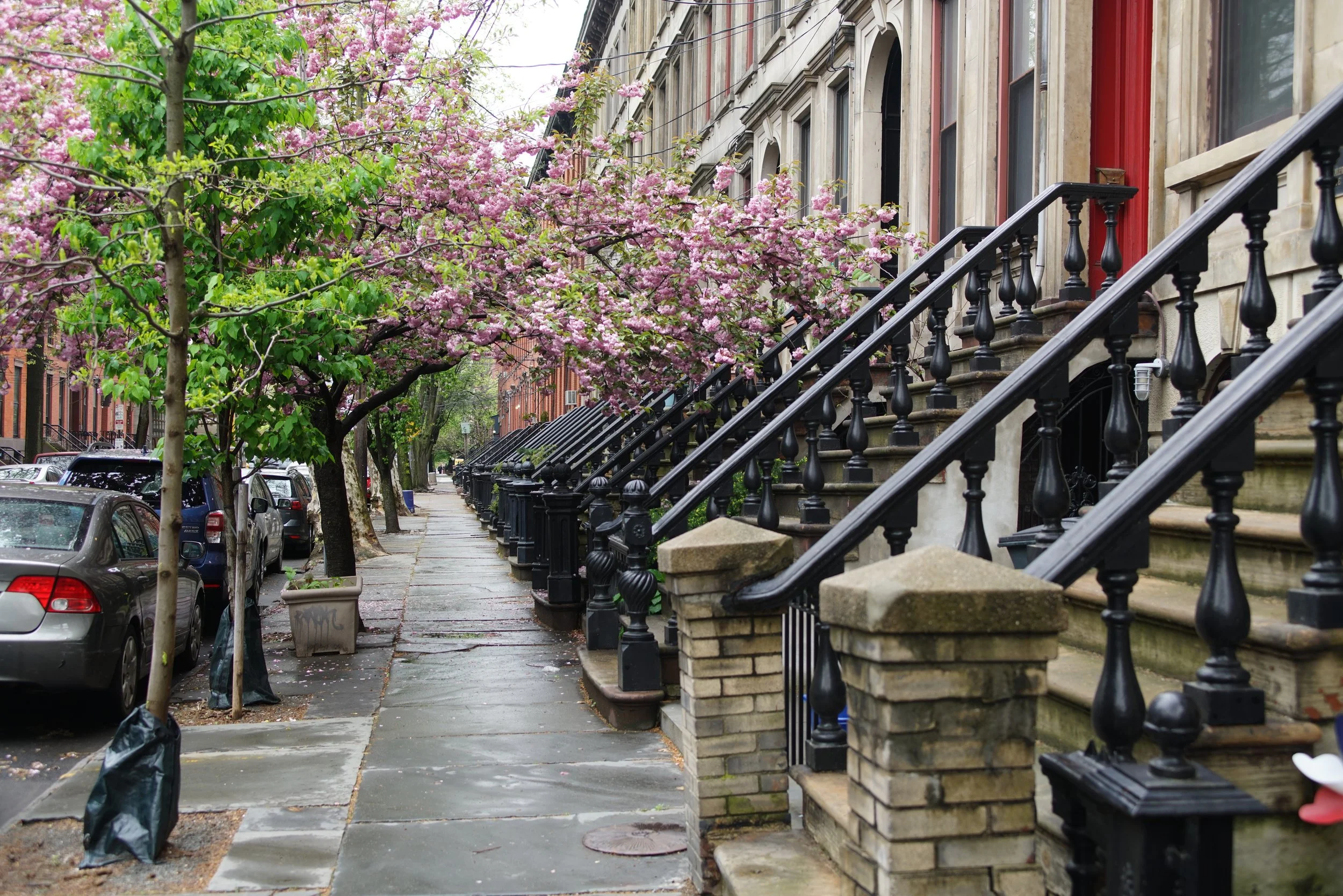
residential street Jersey City, NJ
Jersey City is the cheaper city to buy in, and nothing in this article changes that. In 2025 the average home in Jersey City sold for $786,184, according to the state, while the average Hoboken home sold for $1,064,135. That's a discount of about $278,000, and for a lot of buyers it settles the question.
What the taxes change is how much cheaper it is to own. The average Jersey City home carried a 2025 tax bill of $11,252, while the average Hoboken home paid $9,531. So the less expensive home costs $1,721 more a year to keep, and the reasons behind that are more interesting than "Jersey City has higher taxes." Once you see them, you can tell which neighborhood gives you the better deal on total cost as well as on price.
Are Property Taxes Higher in Hoboken or Jersey City?
Jersey City's are higher, by every measure the state publishes. Here's the side-by-side, drawn entirely from official figures:
| Hoboken | Measure | Jersey City |
|---|---|---|
| $9,531 | Average residential tax bill (2025) | $11,252 |
| $1,064,135 | Average residential sale price (2025) | $786,184 |
| 16,245 | Residential properties | 42,138 |
| 1.805 | General tax rate per $100 (2025) | 2.335 |
| 58.28% | Equalization ratio (2026) | 72.82% |
| 1.08% | Effective tax rate (2025) | 1.86% |
| $350,456 | Taxable market value per resident (2026) | $228,308 |
| $3,644 | Property tax levy per resident (2025) | $3,753 |
| 30.9% | School share of the tax levy (2025) | 44.7% |
Sources: New Jersey Division of Taxation, 2025 Average Residential Statistics; New Jersey Division of Taxation, 2025 Abstract of Ratables and 2026 Chapter 123 ratios; Hudson County Board of Taxation, 2026 Final Equalization Table, certified April 2, 2026; U.S. Census Bureau, 2020 Census. Per-resident figures calculated from these sources.
Look at the rate rows first, because they hide how wide the gap really is. The rates printed on the bills make Jersey City look about 29% more expensive. Corrected for how far each city's assessments trail the market, the gap is about 72%. Hoboken's assessments sit further below market value than Jersey City's, so comparing the printed rates makes Jersey City look better than it is.
How much more Jersey City costs
The last three rows explain where the gap comes from, and each one gets its own section below.
Why Does Hoboken Have a Lower Tax Rate Than Jersey City?
Hoboken's rate is lower because it has far more expensive real estate per resident to spread its budget across. The two cities spend almost the same amount per person.
In 2025, Hoboken's taxing bodies raised $220.2 million in property taxes from a city of 60,419 people, about $3,644 per resident. Jersey City raised $1.097 billion from 292,449 people, about $3,753 per resident. That's a difference of 3%. Neither city is dramatically more expensive to run on a per-person basis.
The difference is the base. According to the county's 2026 equalization table, Hoboken's taxable real estate is worth $21.17 billion, which works out to about $350,456 per resident. Jersey City's comes to $66.77 billion, about $228,308 per resident. Hoboken has 54% more taxable value behind every person, so it can collect nearly the same dollars at a much lower rate.
Why Hoboken’s rate is lower
Property tax raised per resident (2025)
About 3% apart. Neither city costs dramatically more to run per person.
Taxable real estate per resident (2026)
Hoboken has 54% more taxable value behind every resident.
Nearly the same budget per person, spread across a much bigger base, produces a much lower rate.
Per person, Hoboken runs on roughly the same budget as Jersey City. It simply has pricier real estate to send the bill to.
That covers the rate. The next question is what the money pays for, because the two cities split it very differently.
Why Do Jersey City Property Taxes Go More to Schools?
Jersey City sends more to schools because it has proportionally more children, and its schools have lost a large amount of state aid.
In the state's most recent certified abstract, school made up 44.7% of Jersey City's tax levy and 30.9% of Hoboken's. Per resident, that's about $1,678 in school taxes in Jersey City against $1,125 in Hoboken.
Part of that is demographic. According to the 2020 Census, 20% of Jersey City residents are under 18, compared with 15% in Hoboken. Proportionally, Jersey City is educating a third more children per resident.
Where the school dollars come from
School share of the tax levy (2025)
School taxes per resident
Residents under 18 (2020 Census)
Proportionally, Jersey City is educating a third more children per resident.
The other part is money that stopped coming from Trenton. Jersey City's schools have lost nearly $300 million in state aid as the funding formula was changed to reflect the growth in the city's tax base, Gothamist reported in May. The district raised its levy to make up the difference, and local property taxes in the city rose roughly 45% over the past five years.
If you bought in Jersey City five years ago, you already know taxes went up. What keeps people awake is whether the increases are finished, and part of that answer sits in a tool the city uses more than almost any other in New Jersey.
How Do PILOTs Affect Jersey City Property Taxes?
They shift part of the school and county bill onto everyone who pays a conventional tax bill.
A PILOT, short for Payment in Lieu of Taxes, is a long-term tax agreement that lets a new development pay a negotiated amount in place of a standard property tax bill, usually for 10 to 30 years. Jersey City has built much of its newer skyline this way. Under state law, 95% of a long-term PILOT payment goes to the city and 5% to the county. The school district gets nothing.
A conventionally taxed building pays school tax, county tax, and municipal tax. Under a PILOT, the building pays mostly the city. So the school district's budget, and most of the county's share, gets divided among the owners who remain on standard bills, including every Jersey City homeowner without an abatement.
The scale is real. Jersey City's long-term PILOT receipts came to just under $80 million last year, according to a July 2026 analysis of the city budget by BetterBlocksNJ, which also counts 32 long-term PILOTs set to expire between now and 2029. As those buildings convert to conventional taxes, they start paying school and county taxes too, which widens the base those costs are spread across. The city's 2026 interim budget report also describes a proposal to direct 10% of PILOT revenue to the public schools for the first time.
Where the money goes
Conventional tax bill
School tax Paid
County tax Paid
Municipal tax Paid
Long-term PILOT payment
To the city 95%
To the county 5%
To the school district 0%
Split set by state law. The school district receives nothing.
PILOT figures: BetterBlocksNJ analysis of the Jersey City budget, July 2026.
Hoboken has some abated buildings as well, but far fewer relative to its size. PILOTs are a structural part of Jersey City's tax picture in a way they aren't in Hoboken, and they help explain the third difference, which showed up on every Jersey City bill this year.
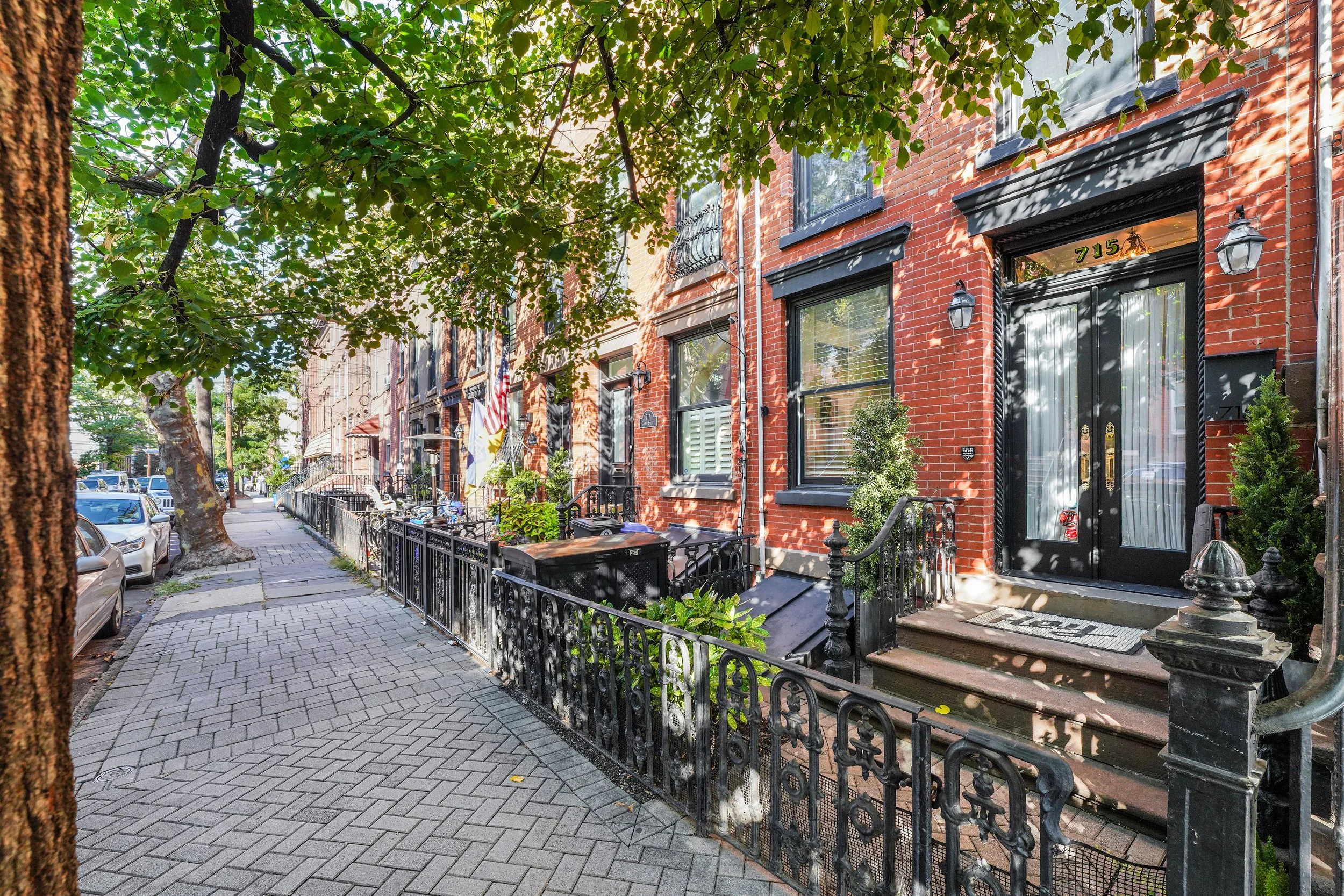
residential street, Hoboken, NJ
Why Did Jersey City's County Tax Rise So Much More Than Hoboken's?
Jersey City's county tax rose faster because its taxable value grew about three times faster, and Hudson County divides its levy by value.
The county's 2026 levy rose 9.27%, to $495.2 million. Each town pays a share based on its portion of the county's total taxable market value. Comparing the state's 2025 figures with the county's 2026 equalization table, Jersey City's taxable market value rose roughly 13%, while Hoboken's rose roughly 4%. Jersey City now accounts for about 45.7% of the county's taxable value, against about 14.5% for Hoboken.
Why the county tax hit Jersey City harder
Growth in taxable market value, 2025 to 2026
Share of Hudson County’s taxable value
2026 county tax change
Same county levy, up 9.27% to $495.2 million, divided by each town’s share of value.
That's how the same county budget produced a 14.42% county tax increase in Jersey City and a 4.6% increase in Hoboken. Jersey City's growth is a sign of a healthy market. It also means Jersey City owners pick up a larger share of the county's costs every year its values outpace the rest of Hudson.
All three forces landed on 2026 bills at once, so here's what they add up to.
How Much Will the Average Property Tax Bill Be in Hoboken and Jersey City in 2026?
Expect about $10,770 in Hoboken and about $12,910 in Jersey City, based on each city's adopted 2026 increases applied to its 2025 average bill.
| 2026 change | Hoboken | Jersey City |
|---|---|---|
| Municipal | +11.5%about +$399 | +15.15%about +$629 |
| County | +4.6%about +$143 | +14.42%about +$298 |
| School | +23.6%about +$694 | About +14.5%about +$730 |
| Estimated 2026 average bill | About $10,770+13% | About $12,910+14.7% |
Method: each city’s 2025 average residential bill, from the New Jersey Division of Taxation, split by its certified 2025 levy shares, with each portion raised by the 2026 increase adopted for it. Increases per Hoboken City Council (June 11, 2026), Hoboken Board of Education 2026-27 budget, Jersey City Council (August 26, 2026), Hudson County 2026 budget, and Marcus & Millichap’s July 2026 Jersey City report. These are estimates. Certified 2026 rates may differ slightly.
Two cross-checks support these estimates. The Hoboken Board of Education calculated its own increase at $714.59 a year on a home assessed at $532,600, close to the $694 estimated here for the city's average home. And Jersey City's own tax calculator showed a combined rate increase of about 14.5%, in line with the 14.7% above.
Notice what this does to the Hoboken story. Its school increase was the steepest of any single piece on either side, and its bills rose almost as fast as Jersey City's this year. The gap between the two average bills still widens, from $1,721 to roughly $2,140, because Jersey City's increases apply to a bigger starting bill.
Averages describe the people who already own. Buyers need the number for the home they're about to buy.
What Will I Pay in Property Taxes Buying in Hoboken vs. Jersey City?
The best estimate is your purchase price multiplied by the city's effective tax rate, which approximates the bill once a home is assessed in line with the market. Here's what that looks like at the August 2026 median sale price in Hoboken and in each Jersey City neighborhood:
| Location | August 2026 median sale price | Estimated annual property tax | Per month |
|---|---|---|---|
| Hoboken | $990,000 | About $10,680 | About $890 |
| Downtown Jersey City | $937,500 | About $17,420 | About $1,450 |
| Jersey City Heights | $875,000 | About $16,260 | About $1,355 |
| Bergen-Lafayette | $718,500 | About $13,350 | About $1,110 |
| West Bergen | $710,000 | About $13,200 | About $1,100 |
| Journal Square | $680,000 | About $12,640 | About $1,055 |
| Greenville | $560,000 | About $10,410 | About $865 |
Swipe the table sideways to see every column
Sources: The Jill Biggs Group, Hoboken and Jersey City market reports, August 2026 (MLS sourced); effective rates from the New Jersey Division of Taxation, 2025 Abstract of Ratables. Estimates only, since each home’s bill depends on its assessment and many newer Downtown buildings carry PILOTs.
Read the top and bottom rows together. A $560,000 home in Greenville and a $990,000 home in Hoboken send the tax collector roughly the same check. And the most useful comparison for most buyers sits in rows one and two: Downtown Jersey City is priced close to Hoboken, and at the effective rate it carries about $6,700 more a year in taxes.
Jersey City applies one tax rate across the whole city, so the differences between neighborhoods come from price, from how old a home's assessment is, and from whether a building has an abatement. That last point matters most Downtown, where a PILOT building's payment can look nothing like the estimate above. Always ask for the specific building's terms.
Price is the number on the sign. Taxes are the number in the fine print, which is exactly where most people stop reading.
Is Jersey City Still Cheaper Than Hoboken Once You Count Property Taxes?
Usually it is, though by less than the sticker price suggests.
At the August 2026 medians, a Jersey City home costs $202,000 less than a Hoboken home and carries about $3,970 more a year in taxes. Over a 30-year mortgage, that tax difference adds up to roughly $119,000, before any future increases. So the taxes absorb more than half of the price gap over the life of the loan. Jersey City still comes out ahead on this simple math, and the buyer who needs the lower entry price is making a sound choice.
At the August 2026 medians
Taxes absorb more than half of the price gapBefore any future increases
The comparison tightens at the higher end. Between Downtown Jersey City and Hoboken, where prices are close, the $6,700 annual tax difference can outweigh the price difference within a few years. For a buyer weighing those two specifically, the monthly cost of ownership deserves as much attention as the list price. Our affordability calculator folds taxes into the full monthly number, and a lender can show you how the tax line changes what you qualify for.
These figures leave out mortgage interest, insurance, HOA fees, and appreciation, all of which move the math, and they assume today's rates hold. They're a way to see the tax effect clearly, and your own numbers belong with a lender and a CPA.
What's the Same About Property Taxes in Both Cities?
The rules are identical. Both cities use the same New Jersey formula, bill quarterly on February 1, May 1, August 1, and November 1, follow the same appeal deadlines, and qualify owners for the same state relief programs, including Stay NJ for homeowners 65 and older with income of $200,000 or less.
If you want the formula itself, our guide to how property taxes are calculated in Hudson County walks through it step by step. For every town's rate and the full picture of this year's increases across the county, see our Hudson County property tax guide for 2026.
Common Questions
Frequently Asked Questions
Jersey City. The state’s 2025 figures put the average residential tax bill at $11,252 in Jersey City and $9,531 in Hoboken, and the effective tax rate at about 1.86% in Jersey City and 1.08% in Hoboken. More local answers are in our Hudson County real estate FAQ.
Hoboken has about $350,000 of taxable real estate per resident, compared with about $228,000 in Jersey City, while both cities raise a similar amount of property tax per resident. A larger base lets Hoboken collect similar dollars at a lower rate.
At Hoboken’s effective tax rate of about 1.08%, roughly $10,800 a year. The actual bill depends on the home’s assessment.
At Jersey City’s effective tax rate of about 1.86%, roughly $14,900 a year. The actual bill depends on the home’s assessment and whether the building has a PILOT.
No. Under state law, 95% of a long-term PILOT payment goes to the city and 5% to the county, and the school district receives nothing. Jersey City has proposed directing 10% of PILOT revenue to its public schools.
In 2026, Jersey City’s estimated average bill rose about 14.7%, compared with about 13% in Hoboken. Hoboken’s school levy rose 23.6%, the largest single increase in either city, while Jersey City’s county tax rose 14.42% against Hoboken’s 4.6%.
Jersey City is cheaper to buy. At the August 2026 medians, a Jersey City home cost $202,000 less, while its estimated property tax ran about $3,970 more a year, which absorbs more than half of the price difference over a 30-year mortgage.
Want to Compare Two Specific Homes?
The tables above are built on medians and averages, and the decision in front of you involves two specific homes with two specific assessments. Send us both addresses and our team will pull each one’s assessment, recent tax history, and any abatement terms, then lay out the full monthly cost of owning each side by side.
If you’re still choosing between the two cities, our Hoboken and Jersey City community guides cover everything beyond the tax bill, and our Hudson County buyer’s guide covers the purchase itself.
Call (973) 495-6038 · Open 8am to 8pm
The Jill Biggs Group · hardwired for hardwork.