
Who Should Price and Market My Home in Jersey City Heights, Downtown, or Journal Square?

Direct Answer
Each of these Jersey City submarkets needs its own pricing and marketing plan. Heights prices turn on the pocket and the view. Downtown prices turn on the building and its tax status. Journal Square prices turn on value against the rest of the city and a direct PATH ride to the World Trade Center. Sellers anywhere above $1 million also pay New Jersey’s Graduated Percent Fee, which belongs in the pricing conversation from the first meeting.
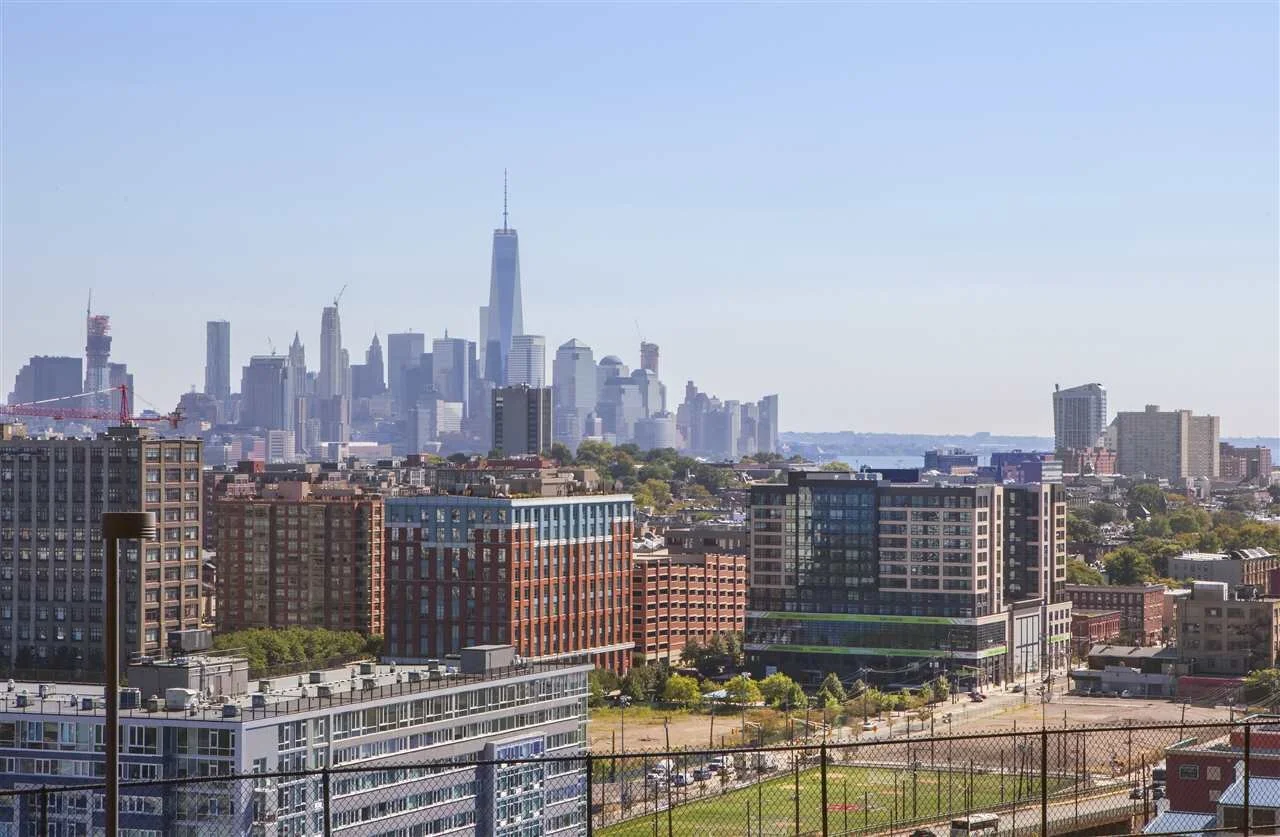
Many buyers cross-shop Downtown, Jersey City Heights, and Journal Square based on transit access and space, making pocket-level pricing and targeted marketing essential for sellers.
If you're selling in Jersey City, the right person to price your home is an agent who has closed recently in your specific neighborhood, and in your building if you own a condo. Downtown, the Heights, and Journal Square sell to different buyers at very different prices, so that agent should be able to show you the exact sales behind their number. That's how The Jill Biggs Group prices every listing in all three neighborhoods, drawing on more than 20 years of sales across Hudson County.
A citywide median is a useful number. It tells you which direction Jersey City is moving, and mortgage rates push the Heights, Downtown, and Journal Square the same way at the same time.
What a citywide number cannot do is price your home. In September 2026 the median sale was $1,195,000 Downtown, $850,500 in the Heights, and $465,000 in Journal Square. An agent who starts from one figure for all three neighborhoods is starting from a figure that describes none of them.
Most sellers interviewing agents carry a private worry: the agent with the highest number is quoting it to win the listing, and the seller learns which number was real a month later, at the first price cut. The quickest test of any agent's price is to ask which sales produced it. A good answer is a short list of recent closings in your pocket or your building, and the rest of this guide shows what that list, and the marketing built on it, looks like in each of the three
Three neighborhoods · September 2026
| September 2026 | Downtown Jersey City | Jersey City HeightsFastest · most competitive | Journal Square |
|---|---|---|---|
| Median sale price | $1,195,000 | $850,500 | $465,000 |
| Price range | $345,000 to $2.425M | $340,000 to $2.15M | $220,000 to $1.34M |
| Median days on market | 26 | 16 | 53 |
| Closings | 31 | 34 | 19 |
| Sold at or above asking | 48% | 74% | 37% |
| Condos as share of sales | 26 of 31 | 21 of 34 | 11 of 19 |
| Active listings | 275 | 226 | 118 |
Swipe the table sideways to see every column
Source: The Jill Biggs Group, Jersey City Real Estate Market Report, September 2026.
Which Jersey City neighborhood is selling fastest?
The Heights is selling fastest. Its median home spent 16 days on the market in September 2026, against 26 Downtown and 53 in Journal Square, and 74% of Heights homes sold at or above asking, with an average list-to-sale ratio of 102.8%, the highest in the city.
Most sellers expect Downtown to win that race, with its towers and three PATH stations. The Heights outpaces it because the two neighborhoods share a buyer. Many Heights buyers toured Downtown first, and a renovated Heights home at a sensible price competes against Downtown homes that cost $344,500 more at the median.
One caution applies to every figure in this guide. Each comes from a single month: Downtown's median reflects 31 closings and Journal Square's reflects 19, and a few sales can move a monthly median by tens of thousands of dollars. The $730,000 gap between the highest and lowest median is too wide for one month's noise to close, which is why we use these numbers to compare neighborhoods and use individual sales to price individual homes. Nowhere does that distinction matter more than in the Heights.
How should I price and market a home in Jersey City Heights?
Price from the pocket, then market the light and the layout. The Heights sits on top of the Palisades in three distinct pockets: the Commercial Spine along Central Avenue, the Skyline and Arts pocket near Riverview-Fisk Park, and the Western Slope.
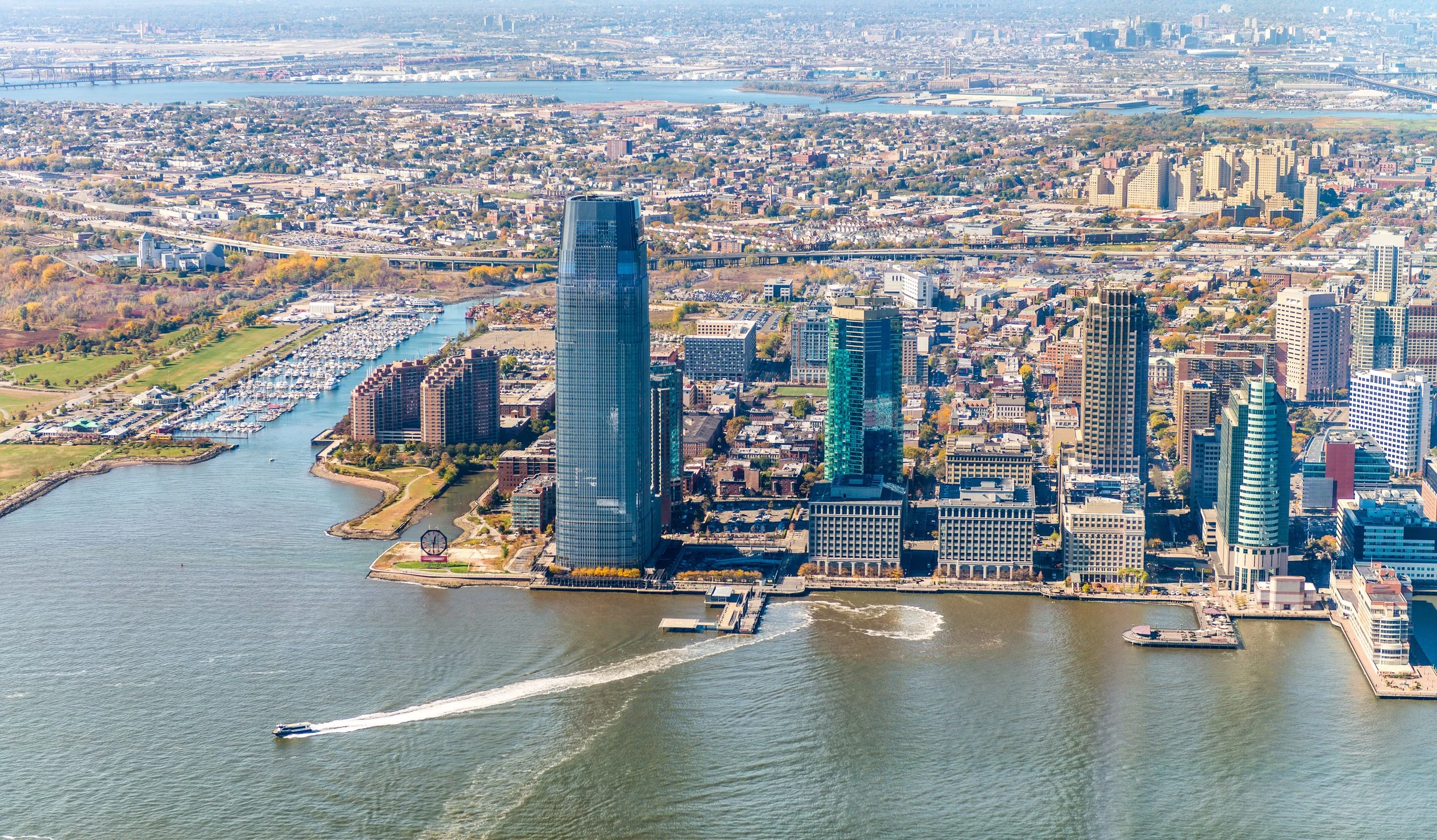
Pricing a home in Jersey City Heights requires a hyper-local approach, as valuations vary across three distinct pockets: the Commercial Spine along Central Avenue, the Skyline and Arts pocket near Riverview-Fisk Park, and the Western Slope.
A two-family on the Skyline side with an open Manhattan view and the same floor plan two blocks inland are different listings. Comp pulls drawn from the whole Heights treat them as one, and September's range shows the cost of that shortcut: Heights homes sold from $340,000 to $2.15 million, so the $850,500 median says very little about any single house. Our September Jersey City market report breaks the month down by neighborhood and property type, and our Jersey City Heights guide walks through each pocket.
Heights buyers are usually shopping for space, and the marketing should show exactly how much of it they get. Photography of the light and a floor plan that shows every room do the work here. A Heights buyer cares less about a fitness center than about where the bikes and the groceries go once they're through the front door, so a high-rise amenity package wastes the listing's first impression.
The top of the Heights range also crosses the $1 million and $2 million breakpoints of a seller-paid state fee, which changes where a list price should land.
Does New Jersey's mansion tax change how I should price a home over $1 million?
Yes, because the seller now pays it. Since July 10, 2025, the Graduated Percent Fee falls on the seller of any residential sale above $1 million and applies to the full price: 1% up to $2 million, 2% up to $2.5 million, 2.5% up to $3 million, 3% up to $3.5 million, and 3.5% above that.
Because the fee applies to the whole price, each breakpoint is a cliff. A sale at $1,000,000 owes no Graduated Percent Fee; a sale at $1,005,000 owes $10,050 and nets the seller less. The sale has to reach about $1,010,100 before the seller comes out ahead of $1 million flat. At the next tier, a $2,000,000 sale owes $20,000 and a $2,010,000 sale owes $40,200, so the break-even sits near $2,020,400.
Graduated Percent Fee · seller pays · full sale price
- 1% to $2M
- 2% to $2.5M
- 2.5% to $3M
- 3% to $3.5M
- 3.5% above
| Sale price | Fee owed | Seller nets |
|---|---|---|
| $1,000,000 | No fee | $1,000,000 |
| $1,005,000Nets less | $10,050 | $994,950 |
| About $1,010,100Break-even | $10,101 | $999,999 |
| Next breakpoint | ||
| $2,000,000 | $20,000 | $1,980,000 |
| $2,010,000Nets less | $40,200 | $1,969,800 |
| About $2,020,400Break-even | $40,408 | $1,979,992 |
Fee figures only, before commissions and other closing costs. Your real estate attorney prepares the closing figures. Source: NJ Division of Taxation, Graduated Percent Fee notice.
With Downtown's median at $1,195,000, this is a routine Downtown pricing question. The decision at each breakpoint is whether to list just under it or far enough above to clear it, and a net sheet at each likely offer makes that choice visible. Your real estate attorney prepares the closing figures, and your CPA should review anything touching your taxes on the sale. In Downtown, the fee is only one of several numbers that set a price before the first showing.
How should I price and market a home in Downtown Jersey City?
Price from the building first. Downtown is six pockets under one name: Grove Street, Van Vorst Park, Hamilton Park, Exchange Place and Paulus Hook, Newport, and the Powerhouse Arts District. A Van Vorst Park brownstone, a Newport high-rise unit, and a Powerhouse loft sit a ten-minute walk apart and have almost nothing in common as comps.
In the towers around Exchange Place, Paulus Hook, and Newport, your competition is usually another unit in your own building. Buyers compare price per square foot and the HOA fee side by side, and the unit that wins on paper gets the showings. Pricing software will average a Newport two-bedroom with a Hamilton Park brownstone without complaint; the buyers for each would object loudly.
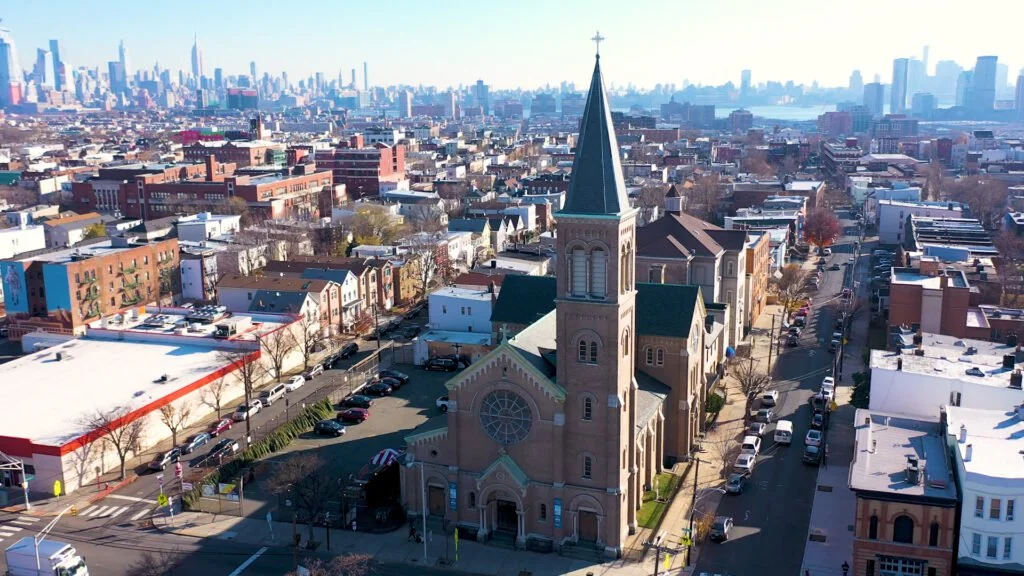
Downtown properties command premium pricing due to direct PATH access into Manhattan, making building-level positioning and commute convenience central to the marketing strategy.
Two documents shape a Downtown condo price before any buyer walks in. Many towers carry a PILOT, a payment-in-lieu-of-taxes agreement whose expiration changes a buyer's monthly carrying cost, and the buyer's lender will ask about it. The HOA package matters just as much: boards can take two to four weeks to produce financials and the condo questionnaire, so we request them the day a seller signs a listing agreement. Our guide to the costs of selling a home in Hudson County covers both.
The PATH premium is the last piece. Exchange Place is the final New Jersey stop on the direct line to the World Trade Center, with Grove Street one stop before it, and Downtown buyers pay for that proximity directly. The brownstones of Van Vorst Park and Hamilton Park are the exception to the building-first rule: they sell on character and block-level comps, much like a Heights row home. Our Downtown Jersey City guide walks through each pocket. Journal Square, a few stops out on the same line, prices on an entirely different logic.
How should I price and market a home in Journal Square?
Price it sharply from the first day. Journal Square's 53-day median is more than three times the Heights', and in a slower market an overpriced opening costs the most.
The pattern repeats every season. A new listing draws its heaviest traffic in its first two weekends, and an overpriced one spends those weekends teaching buyers to wait for the reduction. In a neighborhood where the typical home already takes seven to eight weeks, those lost weekends are expensive.
The marketing should lead with the math. Journal Square's median of $465,000 is $730,000 below Downtown's, and its PATH station sits on the same direct line to the World Trade Center, two stops farther out than Grove Street. Buyers here are trading a slightly longer ride for a much lower entry price, and a listing that spells out that trade gives them the reason to tour. Journal Square has its own three pockets as well: the Kennedy Boulevard PATH corridor, India Square along Newark Avenue, and the residential blocks of McGinley Square, all covered in our Journal Square guide.
Condos made up 11 of Journal Square's 19 September closings, and they price on a different curve than the neighborhood's two-families. A condo owner should start from condo sales in the same or a comparable building. Whatever the neighborhood, a few things belong in every listing plan.
Three neighborhoods, three ways to price · 12 pockets in all
Jersey City Heights
$850,500 median · 16 days on market
Market the light and the layout. Heights buyers are usually shopping for space, and the marketing should show exactly how much of it they get.
3 pockets
- Commercial Spine along Central Avenue
- Skyline and Arts near Riverview-Fisk Park
- Western Slope
Downtown Jersey City
$1,195,000 median · 26 days on market
In the towers, your competition is usually another unit in your own building. Brownstones are the exception: they sell on character and block-level comps.
6 pockets
- Grove Street
- Van Vorst Park
- Hamilton Park
- Exchange Place and Paulus Hook
- Newport
- Powerhouse Arts District
Journal Square
$465,000 median · 53 days on market
A new listing draws its heaviest traffic in its first two weekends, and an overpriced one spends those weekends teaching buyers to wait for the reduction.
3 pockets
- Kennedy Boulevard PATH corridor
- India Square along Newark Avenue
- McGinley Square
What should every Jersey City listing include, whatever the neighborhood?
The comps change with the neighborhood, and the baseline stays the same everywhere. Every Jill Biggs Group listing gets:
- Comparative market analysisA comparative market analysis built from recent sales in the same pocket or building.
- Marketing matched to the buyerMarketing matched to the buyer for that pocket:
- Photography, 3D tour and MLSProfessional photography, a 3D virtual tour, and full NJ MLS syndication at every price point.
- Net sheet with the feeA net sheet that includes the Graduated Percent Fee for any price above $1 million.
- Direct buyer outreachDirect outreach to our network of 90,000+ qualified buyers, built over 20+ years in Hudson County.
Our Selling Your Home guide walks through the full process, and our guide to selling a house in Jersey City covers the steps specific to the city.
Common Questions
Frequently Asked Questions
An agent who prices from recent sales in your pocket: the Commercial Spine, Skyline and Arts, or the Western Slope. Heights sales ran from $340,000 to $2.15 million in September 2026, so the $850,500 neighborhood median is too broad to price a single home. More local answers are in our Hudson County real estate FAQ.
No. Downtown has six pockets: Grove Street, Van Vorst Park, Hamilton Park, Exchange Place and Paulus Hook, Newport, and the Powerhouse Arts District. High-rise units price against their own building; brownstones price against nearby block sales.
Journal Square buyers trade a slightly longer PATH ride for a lower price: its station sits on the same direct line to the World Trade Center, one stop farther out than Grove Street. Its September 2026 median was $465,000, compared with $1,195,000 Downtown and $850,500 in the Heights.
Median days on market in September 2026 was 16 in Jersey City Heights, 26 in Downtown Jersey City, and 53 in Journal Square, per The Jill Biggs Group Jersey City Market Report.
Yes. Since July 10, 2025, the seller pays the Graduated Percent Fee on residential sales above $1 million, from 1% to 3.5% of the full price. Confirm your figure with your real estate attorney.
No. A high-rise condo competes with other units in its building and needs HOA, PILOT, and amenity details ready early. Brownstones compete on character and block-level comparable sales.
In September 2026, the median sale price was $1,195,000 in Downtown Jersey City, $850,500 in Jersey City Heights, and $465,000 in Journal Square, against $801,000 citywide, according to The Jill Biggs Group’s Jersey City market report.
Jersey City Heights. In September 2026, 74% of Heights homes sold at or above asking, with an average list-to-sale ratio of 102.8%, the highest in the city, compared with 48% Downtown and 37% in Journal Square.
What Is My Jersey City Home Worth?
The fastest honest answer comes from recent sales in your own pocket or building, which is exactly what a citywide median can’t give you. If you own in one of these three neighborhoods, send us your address. We will send back the sales we would price it from, the days each of those homes took to sell, and a net sheet at three likely offer prices, with the Graduated Percent Fee included if your number crosses $1 million.
Call (973) 495-6038 · Mon to Fri 8am to 8pm, weekends 8am to 6pm
The Jill Biggs Group · hardwired for hardwork.